Blog

  • Private medical insurance is in high demand. Here’s why…

    Private medical insurance is in high demand. Here’s why…

    Private Medical Insurance (PMI) is experiencing a surge in demand, with a record 6.2 million people now covered in the UK.

    According to the Association of British Insurers (ABI), PMI uptake rose by 7% in 2023, with employer schemes covering 4.7 million individuals—the highest level in over 30 years.

    But what’s driving this growth, and how can businesses maximise the success of their company PMI schemes?

    Are you considering a private health plan for your employees? Take advantage of our free quotation and advice service to find out how much it will cost. Use the chatbot on the right or call 01273 974419.


    Why is PMI becoming more popular?

    PMI is rapidly gaining traction in the UK, with millions opting for this coverage. Even younger people between 18 and 24 are more likely to use private medical insurance – thanks to their enthusiastic embrace of digital tools.

    Some of the forces propelling this trend include:

    Concern over increased NHS pressures

    Private Healthcare Information Network (PHIN) data shows private hospital admissions hit a record 900,000 in 2023, a 7% increase from 2022. This surge is attributed to more people turning to private healthcare services due to escalating wait times within the NHS system.

    A survey conducted by Vitality UK revealed that half of its customers cited long NHS wait times as their reason for investing in PMI.

    With the increasing pressure faced by the NHS and its resources stretched thin, individuals and businesses are increasingly turning toward PMI for quicker access to treatments. This ensures employees can return to work faster after being sick or injured.

    Additional medical treatments available

    New drugs may be available via private health insurance that are currently available on the NHS. This is also true of homeopathy. Meanwhile, some treatments are only sparingly provided on the NHS, such acupuncture, which can be included on a private plan.

    Increased flexibility

    With PMI, employees can often choose where and when they want their treatment and select a schedule that fits their lifestyle. This flexibility helps their treatment plan meet their personal needs.

    Quality of care

    While the NHS provides a brilliant service, a privately health scheme can provide access to superior facilities. For example, private patients can often stay overnight in a private room rather than a busy ward. According to the Independent Healthcare Providers Network (IHPN), 18.7% of people believe PMI provides higher-quality treatments.

    Economic impact

    PMI is playing a crucial role in reducing economic inactivity. The ABI estimates that health insurance prevents 14 million sickness days annually, an amount comparable to the productivity of 12,500 full-time employees. This reinforces the government’s focus on improving workforce productivity through better health support.

    Before investing in a policy or renewing your current scheme, make use of a full free review courtesy of our award-winning advisors at Engage Health Group. Call 01273 974419 or email enquiries@engagehealthgroup.co.uk.


    How to guarantee success with your company PMI scheme

    To make the most of your company health insurance policy, align it with your business goals and what your employees actually need. Here are some steps to help you make it a success:

    • Tailor your coverage to suit your needs: Work with an experienced broker to design a scheme that fits your workforce. Consider employee demographics, job roles, and any specific health concerns.
    • Promote benefits among employees: Employees can’t use what they don’t know exists. Communicate the benefits of your PMI scheme regularly through onboarding sessions, newsletters, and via one-on-one discussions.
    • Take advantage of additional benefits: Many PMI providers include perks like Employee Assistance Programs (EAPs), virtual GP services, and mental health support. Highlight these features to ensure employees see the full value of their coverage. You don’t need to have a diagnosis or even be ill to benefit from some of these services!
    • Review regularly: Review your PMI scheme’s performance and usage regularly. Use employee feedback to make adjustments where necessary. Enlist an impartial broker, like Engage Health Group, to perform a free policy review.
    • Offload admin to a good brokerage: Too often HR or finance teams get tied up in the knotty admin associated with health insurance policies. But a good brokerage like Engage Health Group can take care of the admin for you at no extra charge.


    Investing in Private Medical Insurance

    By investing in a PMI scheme, businesses can enhance employee wellbeing, reduce absenteeism, and improve productivity. With the right approach, a PMI scheme can be a powerful tool for building a healthier, more resilient workforce.

    If you’re considering implementing or refining a company PMI scheme, Engage Health Group can help you navigate your options and find the best solution for your team. Contact us today for more information.

  • 8 mental health insurance options for UK businesses

    8 mental health insurance options for UK businesses

    Insurers are only too aware of the growing demand for mental health support. That’s why they’ve been busy developing their policies to better support people with varying emotional and mental health needs.

    All health insurance providers offer some form of mental health support in their business plans, even if standalone mental health insurance is not available as a distinct policy.

    It’s easy to undersatand why insurer’s are making improvements in this area.

    Businesses today are increasingly looking to support employees with their mental health and wellbeing.

    According to the Health and Safety Executive (HSE), 46% of all work-related ill health cases are linked to stress, depression, or anxiety.

    In this article, we explore what the UK’s eight leading health insurers offer in terms of mental health support.

    Contact our award-winning team to receive free impartial advice and a complimentary quotation service. Engage Health Group compares policies across the market and reviews any policies you have in place to ensure they’re offering the best value.


    What mental health support is commonly offered by health insurers?

    All the leading health insurance providers offer some form of mental health support for their business customers. Many of the support mechanisms they offer are quite similar. For example, Employee Assistance Programmes (EAPS) are offered by all eight insurers featured in this article.

    EAPs are designed to provide emotional support across a wide range of issues. These include psychological stresses and strains related to work, finance, family relations, addiction issues and much more. Support is provided via an online platform which includes access to therapists and, often, specialists in different fields (such as legal and financial).

    EAPs usually come with general wellbeing advice and exercises too, so you don’t need to be experiencing a crisis to benefit. You can read more about EAPs here.

    Another important thing to mention is that mental health support is usually more advanced on Corporate Health Insurance plans which are typically offered to companies with 250-plus employees.

    Finally, as it’s 2024, all the leading Group Health Insurance providers provide some form of wellbeing app or online platform with their policies.


    8 insurers offering mental health coverage for employees


    1.     Aviva Health

    Aviva’s corporate health insurance plans support various mental health needs. Members can easily access its mental health support services through digital tools, which provide security to all its users.

    Aviva’s mental health offering includes:

    • Unlimited Mental Health Support: Aviva offers unlimited access to mental health specialists via a GP referral, ensuring you can get help when needed.
    • Counselling & Therapy: Up to 28 days of inpatient and day patient mental health treatment and access to outpatient services like cognitive behavioral therapy (CBT) and counselling.
    • Apps & Tools: Members can use the Aviva Digital GP app, which provides online GP consultations and self-management resources for mental health, including access to virtual therapy sessions. In addition, you can choose a GP by reviewing their profiles and also get repeat NHS prescriptions.

    NOTE: Access to services may vary depending on which Aviva Business Health Insurance plan you opt-for. Contact one of our expert advisors for expert assistance.


    2.     AXA Health

    AXA Health has a Defaqto 5-star rating and offers mental health coverage to support employees at different stages of their mental health journey. Many of its mental health support services are also available for SMEs, providing access to a wide range of specialists and treatments.

    AXA’s mental health services include:

    • Dedicated mental health line: 24/7 access to a confidential mental health helpline, where staff can speak directly with counsellors and mental health professionals.
    • Inpatient & outpatient support: AXA’s plans cover a range of treatments, from CBT and counselling sessions to more intensive psychiatric care.
    • Apps and tools: The AXA Health App allows staff access to personalised mental health assessments and resources that track your mental wellness over time. By being proactive with the app, you can make small recommended changes that lead to healthier habits over time.

    NOTE: Available services may vary depending on which Aviva Business Health Insurance plan you opt-for.


    3.     Bupa

    Bupa is well-known for its mental health support, providing flexible options to address mental health concerns. Preventive care and ongoing therapy are both catered for.

    Bupa’s mental health services include:

    • Unlimited mental health treatment: Bupa covers treatment for a variety of conditions, including stress, anxiety, and depression. This includes both inpatient and outpatient care.
    • No GP referrals needed: Members don’t need a GP referral to access counselling services, making it easier for them to get help.
    • Apps and tools: The Bupa Blua app offers articles, self-help guides, and tools to manage stress and anxiety. Bupa’s online resources hub, Healthy Me, also provides additional advice from experts.
    • 24/7 mental health support line: Bupa offers a confidential helpline that connects directly with trained counselors.

    NOTE: Available services may vary depending on which Bupa Business Health Insurance plan you select. Contact one of our experts to discover which policy best fits your needs.


    4.     Freedom Health Insurance

    Freedom Health Insurance provides coverage for mental health support via virtual and in-person options.

    • eMed Virtual GP Service: Offers quick access to unlimited mental health consultations with doctors via their eMed GP app, allowing you to get help from home 24/7, 365 days a year.
    • Inpatient & outpatient treatment: Freedom Health Insurance covers short-term and long-term mental health conditions, offering therapy, counselling, and psychiatric care when necessary.
    • Optional mental health coverage: Employers can add mental health support to their corporate plans, providing tailored mental health services based on the company’s needs.

    NOTE: Available services may vary depending on which Freedom Business Health Insurance plan you select.


    5.     Vitality

    Vitality LogoVitality takes a proactive approach to mental health insurance, focusing on wellness and preventative care. Its plans promote mental wellbeing and offer various tools to help its members manage mental health before it gets worse.

    Services included on Vitality’s business plans include:

    • Counseling & therapy: Coverage includes talking therapies such as CBT and counselling sessions, helping members access support in the early stages of mental health difficulties.
    • Subscription to Headspace: Including guided meditations, and yoga sessions
    • Apps and tools: The Vitality Member app offers a range of digital tools and resources for mental health self-care, including wellness trackers, guided meditations, and stress management techniques. The app also provides discounts from its partners to help you manage stress, eat better, lose weight, and quit smoking.
    • Comprehensive mental health cover: Vitality offers ‘bolt-on’ inpatient and outpatient mental health treatment.

    NOTE: Available services may vary depending on which Vitality Company Health Insurance plan you select. Arrange a free consultation with one of our expert advisors to discover which policy best fits your needs.


    6.     Western Provident Association (WPA)

    WPA is known for its personalised approach to health insurance. They focus on providing mental health care as an “add-on” to its core products, including access to treatment and ongoing support.

    Services included on WPA’s business plans include:

    • Extensive Mental Health Cover: WPA covers a wide range of mental health conditions, including anxiety, depression, and other psychiatric disorders – this includes access to treatment and ongoing support.
    • Employee Assistance Programs (EAPs): Like other insurers, WPA offers mental health support for employees, including counselling, advice, and work-life balance tools through its EAP. This cover is available to all WPA members and their families. In addition, remote access through the WPA Helpline is available to everyone above 16 years old every day of the year, 24/7.
    • Apps and tools: Members can use the WPA Health App, which provides access to mental health resources, wellness tracking, and virtual consultations. You can also make and track claims 24/7 through the app, view membership documents, and send and receive messages with WPA through a secure messaging system.

    NOTE: Available services may vary depending on which WPA Company Health Insurance plan you select.


    7.     Benenden Health

    Benenden Health provides affordable health care, focusing on mental health support for employees. They offer straightforward coverage to help employees manage mild to moderate mental health issues.

    Services included on Benenden’s business plans include:

    • Mental health support line: Employees can access free, 24/7 mental health support after six months of membership, giving them direct access to counsellors for issues like stress and anxiety.
    • Short-term therapy: Benenden provides up to 6 sessions of therapy or counselling for employees facing mental health challenges.
    • Apps and tools: The Benenden Wellbeing Hub offers mental health articles, self-help guides, and wellness tools to help employees manage their mental health independently.

    NOTE: Available services listed above may vary according to which Benenden Company PMI plan you select. Arrange a free consultation with one of our award-winning advisors to discover which policy best fits your needs.


    8.     YuLife

    YuLife is a tech-first provider that delivers its health insurance plans through Bupa. Along with Bupa’s mental health support services, businesses also get access to YuLife’s app.

    Services on YuLife’s offering include:

    • Insurance-free assistance: A major benefit of YuLife is that it’s available to anyone, even if your employees aren’t part of their insurance coverage. Your employees can access the app’s wellness and employee perks platform, which includes virtual GP consultations, EAPs, and wellbeing challenges.
    • Employee Assistance Programs (EAPs): YuLife provides access to counselling, mental health assessments, and emotional support through its EAP services.
    • Apps and tools: The YuLife Employee App includes wellness trackers, mindfulness exercises, and access to mental health support, encouraging mental health management.
    • Bupa mental health support: (See Bupa’s offering above.)

    NOTE: Available services may vary depending on which YuLife package you choose.


    Which policy best supports your employee’s mental health?

    The truth is there’s no one answer to this question. Each policy has its own strengths and weaknesses, while each business need differs.

    As an employee benefits consultancy we can help you make the best possible decision by doing the following:

    • Taking the time to understanding what kind of coverage you’re looking for, the number of people you’d like to cover and how much you’re able to invest
    • Gathering a range of quotes from different providers and outlining the key mental health services they offer
    • Considering how the policy will interact with any products or policies you already have in place. For example, do you already have a cash plan or EAP in place?
    • Reviewing any current health and protection policies you have in place to ensure you’re receiving the best value

    The award-winning advisors at Engage Health Group are here to answer all your questions and give advice in your best interests. Simple call 01273974419 or email enquiries@engagehealthgroup.co.uk to arrange a free consultation.


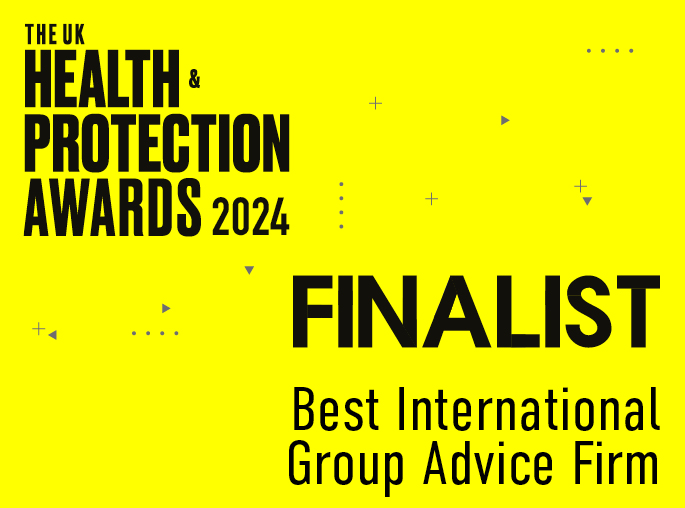
  • Engage wins Best International Group Advice Firm 2024!

    Engage wins Best International Group Advice Firm 2024!

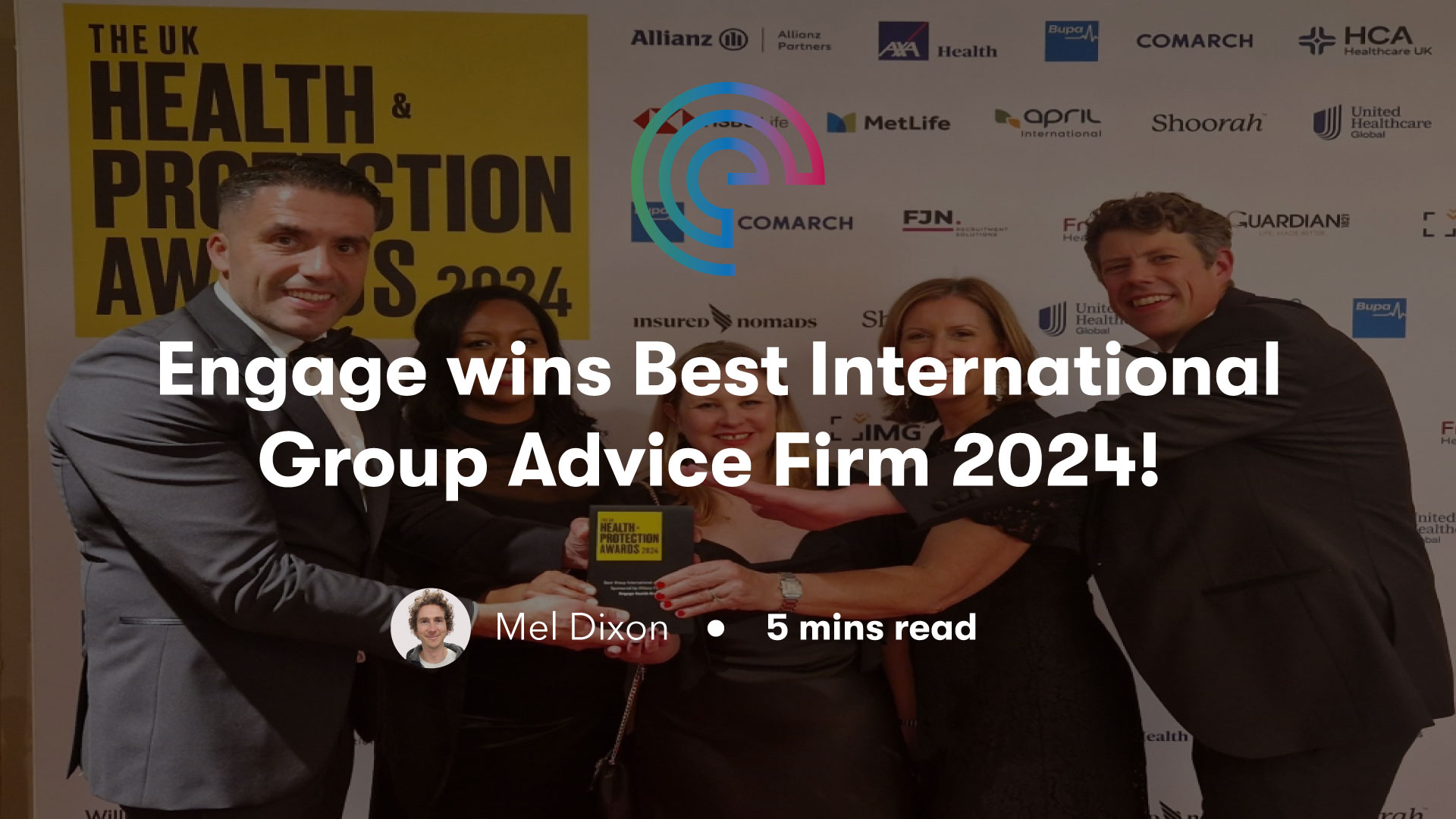
    Engage Health Group won Best International Group Advice Firm at the Health & Protection Awards 2024.

    The prestigious event celebrates the very best work from advisers and insurers in the employee benefits industry.

    It’s the second consecutive year we’ve won the award, and is testament to the hard work and expertise of our international team, led by Ian Abbott and Penny Pemberton.

    In this blog post, we explore the award win in more detail and outline how we help UK companies with global reach look after their employees through their health and protection policies.


    Why the Health & Protection Awards matter

    photo of penny pemberton receiving the award for Best International Group Advice Firm from comedian Kevin Bridges

    More than 700 advisers, insurers and other representatives attended the Health & Protection Awards ceremony at London Hilton Park Lane to celebrate high achievement within the industry.

    Penny Pemberton, Head of International Benefits, received the Best International Group Advice Firm from comedian Kevin Bridges on behalf of our international team.

    “I’m thrilled and proud that the team has been recognised for all their hard work. It’s great recognition for our amazing team.

    “Engage International has built a team of expert consultants with a vast array of experience in the world of international benefits. We genuinely care about our clients and enjoy working to find the best solutions to fit their benefit needs around the world.”

    Do you need international expertise for your business? Email enquiries@engagehealthgroup.co.uk or call 01273 974419 to arrange a meeting with one of our experts.


    How we achieved £250k savings for a global client

    Engage Health Group won this award due to the way we are able to leverage our expertise in the international employee benefits market and streamline our clients’ international benefits programmes.

    Ultimately, the goal is always to improve efficiency, reduce costs and improve employee support. Achieving this across different countries can be very challenging and many HR teams struggle to achieve global oversight on their benefits and achieve consistency in different territories.

    One client we worked with had rapidly grown to 40 separate entities operating across 19 countries. Each entity had separate benefits policies in each country with different insurers, leading to a splintered patchwork of policies to manage.

    The client’s policies included: International and domestic Private Medical Insurance, Life and Disability Insurance and a variety of Employee Assistance Programmes.

    Engage Health Group worked with the client to benchmark current benefits against best practice in each country and identify gaps. Where there were multiple benefit plans in one country, we looked to harmonise benefits with one insurer. Where possible, we brought benefits together under a single global plan while ensuring compliance with local regulations and leveraging economies of scale, which resulted in substantial savings.

    We achieved more than £250K in global savings for the client, with a 25% reduction in their International Medical Insurance premiums alone.

    Our work went beyond traditional consultancy by integrating directly with the client’s platforms, running webinars to educate employees, and acting as a concierge service for all member queries.

    The end result is that the client’s international employee benefits are more cost-efficient, easier to manage, and better aligned with their business growth strategy.


    Do you need help with your employee benefits policies?

    Engage Health Group provides free advice and policy reviews across a range of employee benefits both within the UK and around the world.

    If you’re seeking expert advice and support on your health and protection schemes, then please do get in touch for a no-obligation consultation.

    Email enquiries@engagehealthgroup.co.uk or call 01273 974419.

  • Can employee benefits platforms live up to the hype? A Q&A with Zest’s experts

    Can employee benefits platforms live up to the hype? A Q&A with Zest’s experts

    More companies are using digital platforms to house their employee benefits and make them available to their teams.

    Once upon a time, you needed a digital platform coded especially for your business – and it could get very costly, and complicated!

    Now, you can buy them “straight off the shelf” with the ever-looming promise of being intuitive, innovative and scalable.

    But the quality of the different products varies, as does the price and the sheer scale of what they’re capable of.

    So, in this special article, we quiz three people working at the forefront of employee benefits technology.

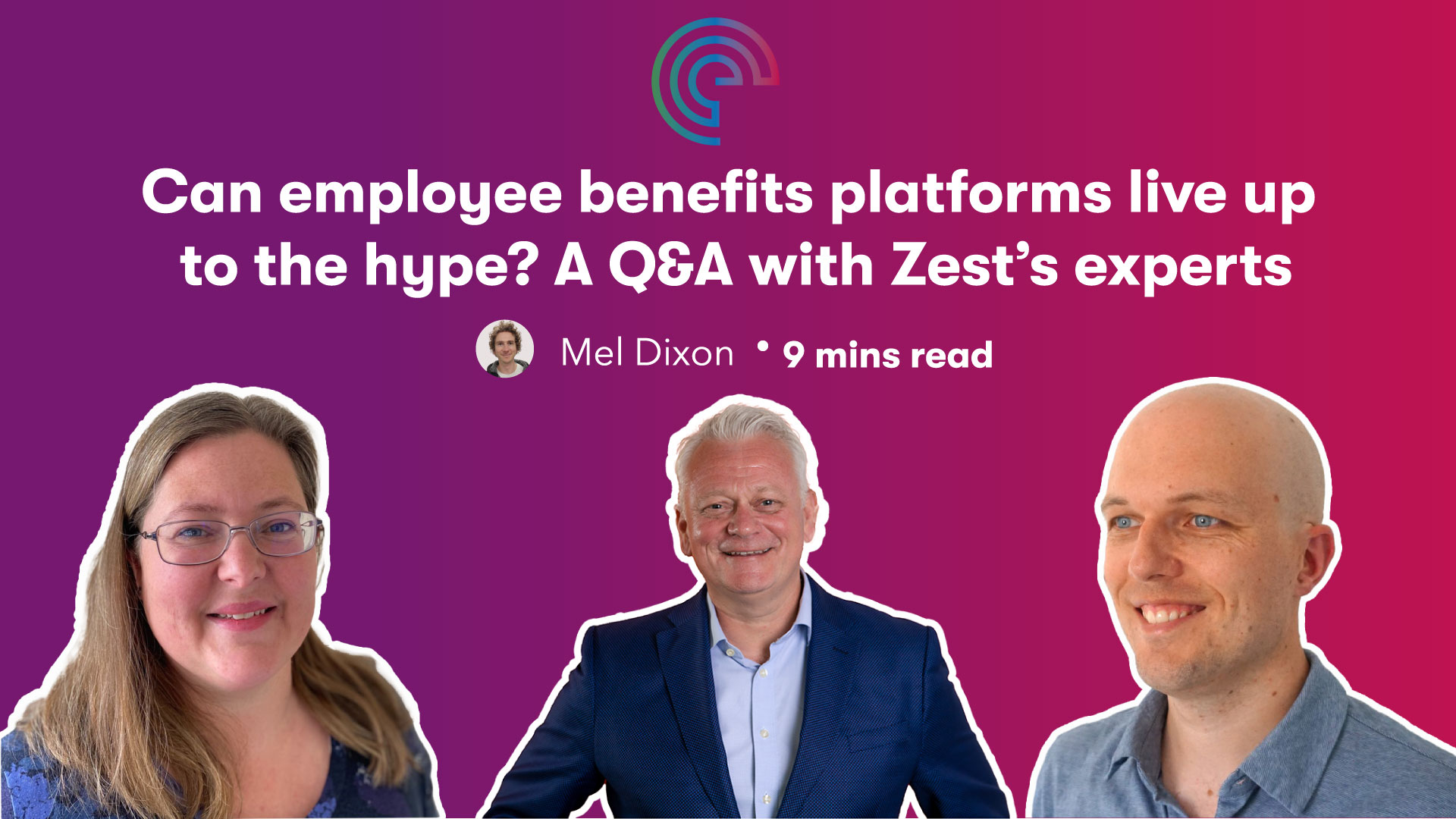
    Joy Waugh is Principle Consultant at multi award-winning employee benefits platform Zest. She works closely with clients and developers to ensure the platform is delivering on expectations and beyond.

    Graham Meinke oversees the design and evolution of Zest’s platform as Chief Product & Innovation Officer.

    Last but not least, Rob Perkins, Head of Partner & Client Success gives his perspective.

    So, how is the technology delivering on its promise of making life easier for businesses and employees? And how is the technology set to evolve?

    Read on for answers to these questions and a lot more…

    Engage Health Group is an employee benefits consultancy dedicated to helping businesses source the best health and protection policies for their staff. If you need free advice or reviews of existing policies from industry experts, we’re always happy to help. Contact 01273 974419 or enquiries@engagehealthgroup.co.uk.


    Q: How do employee benefits platforms help staff?

    joy waughEase-of-use is key here, says Joy Waugh, Principal Consultant at Zest:

    Employee benefits platforms significantly enhance the employee experience by providing easy access to all their benefit information in one centralised location, such as ‘what benefits do I have’ ‘why have it’, ‘how does it work’, ‘which options are available’, ‘how much is it going to cost’ and ‘do you benefit from any savings in tax and National Insurance’.

    These platforms offer personalised options, allowing employees to choose benefits that best suit their individual needs, whether it’s healthcare, wellness programs, retirement plans, or additional perks like discounts and rewards.

    This flexibility can lead to increased employee satisfaction and wellbeing, as staff feel valued and supported by their employer.

    Moreover, the convenience of having everything in one place, often accessible through a user-friendly interface or mobile app, makes it easier for employees to take full advantage of their benefits, leading to higher engagement and retention rates.


    Q: And what does the employer get out of it?

    Here, it’s a case of easing the administrative burden on busy HR and People teams but also making use of analytics. Joy explains:

    For employers, employee benefits platforms streamline the management and delivery of benefits, reducing administrative burden and improving efficiency. By offering a customisable and comprehensive benefits package, employers can attract and retain top talent, which is critical in today’s competitive market.

    Furthermore, these platforms often provide valuable insights through analytics and reporting tools, helping employers understand which benefits are most valued by their workforce and adjust offerings accordingly.

    This data-driven approach not only optimises the benefits package but also enhance employee satisfaction and loyalty, contributing to a positive workplace culture.

    Additionally, a well-implemented benefits platform can lead to reduced absenteeism and higher productivity, as employees who feel supported and appreciated are more likely to be engaged in their work.


    Q: Can it work for SMEs just the same as for larger corporations? 



    Benefits platforms have essentially closed the gap between smaller businesses and larger corporates in the benefits space, says Joy:

    Technology improvements and simplified configuration have allowed smaller companies to compete with larger organisations as the cost barriers to implement and manage platforms are being broken down.

    Also, the project time to implement means that fewer resources are needed, whether it’s a larger organisation or a smaller organisation.

    Large companies typically have a team available, but with smaller organisations there is a limitation on resource which has previously restricted their ability to implement platforms.

    But with more user-friendly platforms requiring less, resource, it means it’s much more viable to implement benefits and SME’s are really keen to attract talent and retain employees by offering compelling benefits. They love this innovative and intuitive platform which enables them to do just that.

    Also many platforms are scalable, meaning they can grow with the company, adding features and options as the business expands.


    Q: Do you encounter any common misconceptions about employee benefit platforms?

    Many companies feel that a benefits platform will actually put strain on busy HR teams, says Joy:

    One of the big barriers is the perceived administrative burden. Many companies see they’re implementing benefits, which means a platform which means more administration.

    There is also a fear of long project timelines and the resources needed internally to understand technical requirements, plus the fact that they would need to understand not only technical requirements, but then work on those platforms and need lots of training to ensure that they keep everything up to date. In reality, most modern platform as Zest are designed to be user-friendly and come with dedicated support teams to assist with setup and ongoing management.

    Another misconception is that employee benefits platforms are only suitable for large companies with extensive budget. As mentioned earlier, these platforms are highly scalable and can be just as beneficial for SME’s.

    There’s also a belief that these platforms only benefit employees and don’t much offer to employers. However, as discussed, employers gain valuable insights, streamline processes, and improve overall employee satisfaction which can lead to a more motivated and productive workforce.

    Lastly, some think that these platforms are rigid and don’t allow for much customisation. On the contrary, most platforms offer a high degree of flexibility, allowing employers to tailor their offerings and meet the specific needs of their workforce.

    photo of graham meinkeGraham Meinke, Zest’s Chief Product & Innovation Officer, agrees. But he also thinks a lot of it is caused by bitter previous experience using older, more cumbersome platforms:

    Technology has moved forward considerably in the last 10 years, and unfortunately lots of companies are still operating on the old legacy platforms and therefore they’ve got this misconception that setting up a benefits platform is complicated, and even renewing a benefits platform is a big, painful, complicated thing to do.

    The truth is, if you buy a modern benefits platform, where everything is codeless rather than coded to your individual implementation, then it’s a much more straightforward and a much less costly exercise than people often think it is.

    Other misconceptions about employee benefits platforms is that true automation isn’t possible when it absolutely is. Unfortunately, in the early days of employee benefits platforms, 15-20 years ago, a lot was over-promised around automation and failed to materialise. It will be delivered based on those existing solutions. Again, some platforms like ours have moved on in a considerable way and allow you to know the value of true automation.

    And they’ve got this misconception that a fair bit of manual administration is still needed and it’s just not true. It might be the case for their current platform, but it doesn’t have to be that way.


    Q: How much have benefits platforms evolved over the last 5 years?

     

    Joy suggests that some have evolved more than others:

    Some are still stuck in code-heavy platforms which require a lot of time, which is why you see some misconceptions.

    Platforms like Zest have undergone a significant transformation over the last five years, not only by expanding and enhancing their core services but also by integrating new areas such as employee engagement. This evolution has allowed them to offer a more comprehensive suite of tools that goes beyond traditional benefits management.

    Now, these platforms facilitate rich content and communication across a wide range of topics, including company culture, organisational values, and what it truly means to be part of the organisation. By doing so, they help create a more connected and engaged workforce, bridging the gap between benefits and the broader employee experience.

    And in a similar way, the breadth of benefits has expanded to focus on wellbeing areas such as mental health, menopause, elder care and financial wellbeing. There’s been a marked shift in offering more than just the traditional pensions, life insurance and PMI, with perhaps Cycle to Work or Gym Memberships thrown in – to a host of proactive initiatives.

    On the depth of service point, we are seeing greater integrations and data mapping – the automation of the flow of data from HR via a platform to payroll and providers including SSO (Single Sign-On technology) and API (synching information from one system to another).

    Additionally, mobile access has become a standard feature, allowing employees to manage and access their benefits anytime and anywhere.

    Graham highlights the impact of cloud-based technology which allows platforms to evolve with the needs of businesses:

    Oh, it’s massively evolved massively over the last five years. I think the fundamental thing that’s changed is just the way in which any multi-tenanted platform is architected now versus platforms that you saw 5-10 years ago. They are completely different, which means that they are cloud-native platforms.

    Scalability is built into the way in which they’re designed. Resilience is built into the way they’re designed. Performance is built into the way that they’re designed, and importantly, from a data perspective, it is a single implementation and that’s what enables all of those rich insights that wouldn’t have been possible 10 years ago when everyone had their own instance of an application that was coded for that specific need.

    The thing that’s probably moved on the least is the front end in the last five years, in terms of the same design patterns.

    Regarding best practice, it still holds true, but it’s all of the work to handle all of that complexity and take that complexity out of being a painful implementation. That’s what’s moved on in the industry and certainly some parts of the industry like ours, have taken complexity away from clients and made it super simple.


    Q: What are your predictions for the future of employee benefits platforms?

     

    Graham foresees a future of more personalised experiences and data which can feed into board level conversations:

    On the employee side there will be hyper-personalisation and that will involve a lot more targeted content based on the needs of that individual. This could be based around their personal situation, their work role, and the cohorts that they sit within.

    On the admin side of the business, the side of employee benefits platform, the insight in which people will be able to gain is going to be much more outcome-focused and tied directly to board level conversations.

    So, we’re going to move away from basic benefit information, such as uptake, benefit cost savings etc, and move much more into business outcome-based data. It will be so much more proactive, being able to identify the areas of risk of attrition within the business and highlighting the specific actions that people need to undertake to remedy those things.

    The insights can be much more focused on the fundamentals of how our actions are tied to attracting, retaining and engaging talent. And I think you’ll find from an engagement perspective, both for the business and for the employees, you’re going to see platforms becoming much more multi-channel in their campaign capabilities.

    So, whereas before people thought about communications in the context of putting some posters up on the wall and sending emails, now you’ll find that there’s many more options available. In-app content for mobile push notifications on top of emails and your hard copy campaign material too. Those will all be much more integrated into campaigns where individual actions can be tracked to make sure that messages have been understood and received by employees.


    Q: Have you noticed trends this year in terms of most popular employee benefits accessed via your platform?

    Joy is noticing a wider range of benefit take up:

    We’ve observed a consistent year-on-year increase in holiday trading and a general rise in the overall uptake of benefits. This trend highlights the importance of recognising employees with unique needs and preferences. Offering a broader range of benefits allows employees to select options that truly resonate with them. As a result, while certain benefits might not see the same level of participation as in previous years, we’re noticing a more diverse and widespread engagement across the entire spectrum of benefits. This broader uptake underscored the value of providing a wide array of choices that cater to the varied priorities of a workforce.


    Q: Mental wellbeing seems to be a big issue right now, how can benefit platforms help in this respect?

    Benefit platforms can help in three main ways says Jo:

    Mental wellbeing has indeed become a critical focus for both employees and employers, especially in light of the increased stress and uncertainty brought about by global events like COVID-19 pandemic. Employee benefits platforms can play a crucial role in supporting mental wellbeing by providing access to a wide range of resources and services.

    Firstly, it’s about communicating the mental health support channels available. Whether that’s via an EAP (Employee Assistance Programme), or an in-house team or occupational support. These tools offer employees confidential and convenient access to mental health support. This can be crucial for those who might be reluctant to seek help though traditional means.

    Additionally, benefits platforms can help foster a culture of mental wellbeing by offering wellness challenges, resilience training, and peer support networks, all of which can help reduce the stigma around mental health issues and encourage employees to prioritise their wellbeing.

    By integrating mental health resources directly into the platform, employers can ensure that support is easily accessible and normalised as part of the overall benefits package. This not only helps employees manage stress and prevent burnout but also contributes to a more engaged, productive, and satisfied workforce.


    Q: Give us the hard sell!! What differentiates Zest from the competition?


    Rob Perkins, Head of Partner & Client Success waxes lyrical about the features and functionality that make things simpler and more accessible for employees and management alike:

    Zest benefits platform stands out in several key ways, starting with our exceptional Net Promoter Score (NPS) of 82, which is a testament to the high level of satisfaction and loyalty our customers have.

    One of our key differentiators is the platform’s ability to centralise all employee benefits in one accessible place, simplifying the process of managing and utilising benefits. Employees can effortlessly navigate and optimise their benefits though a personalised experience tailored to their specific needs and preferences. This personalised approach ensures that each employee feels uniquely values, leading to higher engagement.

    Our mobile app further enhances accessibility, providing employees with the flexibility to manage their benefits on-the-go. Whether checking benefits, tracking usage, or receiving timely notifications, the app keeps everything at their fingerprint.

    We also offer a comprehensive Total Reward Statement, which provides employees with a transparent view of their entire compensation package, beyond just salary. This clear and detailed overview helps employees appreciate the full value of what they receive, fostering a stronger connection to the company.

    For employers, our platform is a game-changer in terms of efficiency and flexibility. It allows  for the creation and management of complex benefits schemes, catering to the diverse needs of different employee groups. HR and People teams can also see and deliver targeted, personalised email campaigns to promote specific benefits to particular cohorts, ensuring that the right information reaches the right people at the right time.

    Automation is another area where our platform excels. Routine tasks, such as adjusting benefits when employees update their lifestyle or when employee data changes, are seamlessly automated. This reduces administrative overhead and ensures that employee’s benefits are always aligned with their current life circumstances.

    Additionally, the platform provides automated and scheduled reports, along with real-time data insights, empowering HR teams to make informed decisions. Our marketplace is another standout feature, offering employers the opportunity to explore and select additional perks that enhance their benefits strategy.

    Zest platform’s excellence is recognised industry-wide, as evidenced by our awards for Best Employee Benefits Technology and WorkTech of the Year. These accolades highlight our commitment to innovation and our leadership in the employee benefits space, providing a robust, flexible, and user-friendly solution that meets the needs to both employees and employers.


    While Zest is an award-winning platform provider, Engage Health Group is an award-winner in the field of employee benefits consultancy. We provide free reviews of health insurance, life insurance, income protection and other policies. Contact 01273 974419 or enquiries@engagehealthgroup.co.uk to arrange a call with one of our expert advisors.
     

  • Combatting the rising costs of Company Health Insurance renewals

    Combatting the rising costs of Company Health Insurance renewals

    Many businesses face a hike in their health insurance premiums during renewal season. But why does this happen, and can you do anything to keep costs down?

    In this blog post, we’ll break down the renewal process, explore why costs tend to rise, and share how you can combat these price increases.

    Need help renewing your Group Health Insurance scheme, but unsure where to begin? Get FREE one-to-one advice from our award-winning experts on 01273 974419 or email enquiries@enagehealthgroup.co.uk.


    Why Health Insurance renewal costs tend to rise

    Health insurance premiums typically rise each year and right now the industry is seeing bigger increases than usual. Demand for health insurance has soared in the face of concerns around NHS waiting lists, which the Health Foundation predicts will top 8 million this year.

    As more people turn to private health insurance to avoid delays in NHS services, the number of claims on private policies is rising. A record of nearly £3bn was paid out in 2022.

    Meanwhile, the number of people with private health insurance in the UK has reached 7.3 million, according to LaingBuisson. This is the highest level since 2008.

    The increase in claims, combined with rising medical expenses and heightened demand for health services, results in businesses often facing higher premiums year after year​.

    However, if your business is faced with a steep premium rise, it doesn’t mean you have to accept it. The renewal period allows you to reassess your policy and ensure it provides value for your business and its employees.


    How the renewal process works

    When your Group Health Insurance policy is in place, the premium rates are typically fixed for 12 months. However, as the renewal date approaches — usually 6-8 weeks before the annual renewal — your insurer will update you on any changes to the policy, including price adjustments and any changes to services or features included.

    This renewal period, which begins around 4-6 weeks prior to policy expiration, is your opportunity to review and adjust your policy:

    Is it still providing value for money?

    Are your employees making good use of it?

    Have there been changes in the terms and conditions that might affect your decision to renew?

    At this point, you can decide whether to renew the current policy, make changes to better suit your current needs, or explore alternative options. If you choose to renew, you must provide updated employee data, claims information, and any amendments you wish to make.


    How Health Insurance renewal premiums are calculated

    Company Health Insurance renewal premiums are determined based on several factors specific to your organisation:

    • Age: If the average age of employees covered by the plan has changed, it could impact your premium.
    • Employee number: Changes in the number of employees on the scheme will impact the premium.
    • Base rate: Insurers may increase base rates across all schemes, often due to inflation.
    • Claims: The number of claims made on your company’s policy affects its performance and can influence the renewal premium. Being part of a claims pool means that your premium is influenced by the overall claims activity of similar policies. Therefore, your premium can still increase, even if your company hasn’t made many claims.

    Engage Health Group’s expert consultants negotiate on behalf of clients, striving to save them money on health insurance renewals. Email enquiries@engagehealthgroup.co.uk or call our brokers on 01273 974419 for FREE no-obligation advice.


    How Engage Health Group helps lower renewal costs

    When it comes to renewals, our brokers start with a comprehensive fact-finding process to understand your business, your employees’ needs, and the details of your current policy. We then conduct a full market review, gathering quotes from various insurers to offer you a range of options.

    A great example of our work involves our Senior International Manager, James Carrick, who assisted a leading gambling organisation with their multi-country health insurance and employee benefits package. Initially, their International Group Health Insurance premium was set to increase by 8-9%, which would have raised their premium to approximately £90k.

    Through negotiation, James managed to reduce the increase to just 1%, saving the client around £80k.

    James then redirected the savings to enhance the company’s employee benefits, through purchasing International Life Insurance and International Disability Coverage.

    I’d seen a gap in their employee benefits package compared to their competitors so it was important to get that covered,” said James.

    Policies like life insurance and group disability reassure employees that if anything untoward is to happen, there is a financial safety net in place.”

    A few other tips and tricks to help lower premium rises:

    • If certain features of a policy are receiving no use, you might consider taking those features away in order to help lower the premium.
    • Speak to other providers to see if any better deals are available.
    • Consider adding or raising the excess to lower your premium. The excess is the amount you pay towards a treatment. But a word of caution – this approach doesn’t always provide the best value and can even end up being more expensive depending on the number of claims made.
    • Consider enlisting the services of an impartial broker like Engage Health Group, who can use their book of business and negotiating power to potentially lower premium increases.


    Finding the right support from a Health Insurance broker

    At Engage Health Group, we guide you through all available options and gather quotes from across the market to ensure you receive the best deal on your health insurance scheme. At the renewal stage we always review any policies your company has in place to ensure you are receiving the best value for money.

    Contact our expert team at enquiries@engagehealthgroup.co.uk or call 01273 974419 for FREE advice and support.

  • Benchmarking: How do you shape up against the competition?

    Benchmarking: How do you shape up against the competition?

    Recruiting and retaining the best talent in your industry requires a competitive salary, a winning company culture and, increasingly, an attractive employee benefits offering.

    So, how do you know if your employee benefits are ticking all the right boxes? This is where benchmarking comes in.

    This article explores the value of comparing your benefits to typical employer practice in the industry or country you’re operating in.

    Need help launching or reviewing your employee benefits plan? Get FREE expert advice from our consultants on 01273 974419 or email enquiries@engagehealthgroup.co.uk.


    The importance of benchmarking

    What is employee benefits benchmarking?

    The most common form of benefits benchmarking involves the process of comparing how your benefits package compares to standard industry practice.

    For businesses that employ globally, there is the challenge of benchmarking across different countries and ensuring you are complying with local regulations.

    James Carrick, International Senior Manager at Engage, explains the process:

    “Benchmarking could be anything from providing a side-by-side benefit comparison, to industry-specific information, country prevalence and typical employer practice.”

    When Engage customers receive benchmarking reports, they also benefit from the consultant’s expertise.

    “We often extrapolate the gathered information for our clients too, providing our insights and opinion rather than just passing on the report’s findings without context.”

    “For a company with employees in different countries, we can use our network of local specialists to ensure we’re up-to-date with typical employer practice and the finer points of local legislation.”

    Whether you need to start from scratch with an employee benefits plan, or are reviewing current benefits, benchmarking helps businesses to:

    • Identify any missing key benefits compared to competitors
    • Ensure are no duplicated benefits – and therefore unnecessary spend
    • Assess how you shape up within your industry
    • Provide the employee benefits staff expect
    • Ensure your employee benefits are relevant and effective


    The benefits of employee benefit benchmarking

    In the rush to execute their benefits policies, some businesses skip benchmarking but this would be unwise. Below we have outlined the benefits of benchmarking, especially when it comes to attracting and retaining the best talent.

    #1 Identify gaps in your benefits plan compared to the competition

    For example, if other businesses in your industry are providing a Group Health Insurance plan and you’re not, potential employees will likely take this into account when considering their options. Equipped with this knowledge, you can ensure your benefits plan is, at the very least, matching the competition.

    #2 Attract and retain the best talent in your industry

    Multiple surveys show that employee benefits have become a key part of a company’s recruitment and retention efforts.

    According to a survey by One Medical, 69% of employees say they might choose one job over another if it’s offering better benefits.

    Meanwhile, 37% of employees joined their current employer due to their benefits package, and 44% said they have stuck with their employer for the same reason, according to the 2024 Global Benefits Attitudes Survey.

    By benchmarking against best practice in your industry, you can be sure that your benefits package will be a key tool for finding and keeping the best people.

    #3 Adapt to trends

    Benchmarking enables your business to stay ahead of the game – not just matching the competition, but going one step further.

    Employee demand is always evolving and so are the products and technologies that companies have available. Doing some benchmarking will potentially highlight some new ideas and trends that you previously hadn’t been aware of.

    Exploring what other companies are providing for employees is a good starting point to ensure your benefits are capable of standing out from the competition.

    #4 Ensure compliance in different countries

    If you have multiple plans in different countries around the world, it can be very difficult to monitor whether you have the correct plans in place. Consequently, there is a risk that there may be gaps if local benefits don’t meet local regulatory requirements

    #5 Greater visibility and cost control

    It’s not easy to have visibility of all your benefits in the UK and around the world.  A full benchmark of your benefits highlights opportunities to simplify and harmonise benefit plans and identify cost savings


    Want to discover how your employee health, wellbeing & protection policies compare against the competition? Engage Health Group consultants provide benchmarking services as part of our free consultancy service to UK businesses, including those with global workers. Contact our team for free advice and guidance on 01273 974419 or email enquiries@engagehealthgroup.co.uk.


    The value of investigating other companies

    Salary size remains important, but employee benefits policies are a very important part of your ‘Employee Value Proposition’ especially during a time of high living costs and high demand for health and wellbeing support.

    Employee benefits packages can either make or break hiring and retention efforts. Sixty-five per cent of candidates say they consider employee benefits as a crucial factor when job hunting, according to data collected by Avado.

    By benchmarking your employee benefits offering against other companies in your industry, you can ensure your offering is capable of attracting the kinds of people who will drive your business forward.


    How our Engage brokers implement benchmarking

    Some businesses will come to us with a list of objectives they want to achieve from their employee benefits investment. For example, they may want to reduce staff sickness or improve staff retention rates.

    With this in mind, we have to think of all possible angles when we assess data. Benchmarking allows us to take a look at what other companies in your industry are providing.

    Our benchmarking service is also provided for companies with a global footprint. On a global scale, it can be  overwhelming to have multiple plans in different countries. The auditing and benchmarking of benefits ensures global oversight and governance.

    We can compare and contrast benefits trends, requirements and expectations across different countries.

    We provide country reports and country prevalence information to some clients for free,” says James. “It’s important to note though that this is on a case-by-case basis, determined by the size, strategic fit and revenue opportunities.”

    As employee benefits brokers, Engage Health Group will:

    • Review your existing benefits in all countries
    • Benchmark benefits against mandatory and typical market practice
    • Compare benefits against competitors
    • Analyse results and identify gaps and potential areas for improvement or change
    • Provide an overview of potential costs and how best to proceed to the next steps

    Contact our expert team at enquiries@engagehealthgroup.co.uk or call 01273 974419 for FREE no-obligation advice and support.

  • Employee benefits worldwide: 7 common challenges & how to solve them

    Employee benefits worldwide: 7 common challenges & how to solve them

    The makeup and location of your workforce will be unique to your business. But whatever the number and wherever they are based, you will need to comply with the regulations of each country and meet differing cultural expectations.

    Every country has its quirks. And the more countries covered, the more complex the situation becomes.

    Let’s take a look at some of these challenges in more detail…

    Need help providing the right support to your international workforce? Get FREE expert advice from our consultants on 01273 974419 or email enquiries@engagehealthgroup.co.uk.


    Challenge #1:

    Understanding rules and regulations in multiple countries

    Often employee benefits are managed by small HR teams located in a central location. If you’re a UK-headquartered business, then this is where your HR team is likely to be based.

    Not only must you arrange health and protection schemes in the UK, you have to do the same in other countries too. Even the most well-resourced personnel department will find this a struggle.

    A number of question arise:

    • Should I provide health insurance, life insurance or other policies in this country?
    • Are there different legal requirements?
    • Are there different employee expectations?
    • What do similar companies provide for their workers in the same location?
    • How do I attract the best people?

    Recommended solution:

    It’s a good idea to contact an employee benefits broker who operates in the relevant country. They can advise you on the best course of action and ensure you are legally compliant in regard to employee benefits.

    Engage Health Group has a broker network covering more than 70 countries, so we are able to advise on the best way to arrange health and protection coverage for your workers.


    Challenge #2:

    Managing and clarifying costs

    We often work with companies who struggle to gain visibility on their benefits spend around the world. It’s easy to understand why: companies often have separate policies for different countries, premiums change year-on-year and insurance claims vary.

    There are also digital platforms and various wellness solutions to manage too. So, pulling it all together and getting a clear sight of costs is often difficult.

    Recommended solution:

    Businesses can arrange “umbrella” policies that cover multiple countries under one plan. For example, International Private Medical Insurance can provide health coverage to employees in different countries. These types of policy make it easier to track costs, and the more countries you need to cover, the more advantageous it becomes.


    Challenge #3:

    Affordability for smaller employee numbers

    Even the largest companies find it difficult to achieve economies of scale through their global benefits but they often have larger and more dispersed budgets to make it more affordable.

    However, SMEs with smaller budgets will struggle to find suitable, cost-effective options to cover their global workforce or achieve return on investment. With fewer employee numbers in each country, it is very difficult to obtain competitive benefits.

    Recommended solution:

    It’s worth partnering with an employee benefits consultancy who can design solutions specifically for the needs of your workforce. Many brokers focus on serving large corporates, but Engage Health Group offers bespoke offering for different-sized companies. And our advice comes at no extra cost.


    Challenge #4:

    Minding the gaps in legal compliance and duty of care

    It’s hardly surprising that overstretched HR teams might miss something when administering global benefits. Whether you have HR departments in different countries, or one centralised team, guaranteeing compliance is difficult.

    Insurance solutions vary widely in each country and in many countries there are now mandatory obligations. It’s a complex web of rules and regulations out there, but there are a couple of options to do so safely.

    Recommended solution:

    Many companies outsource to employee benefits consultants, like Engage, with global expertise. Alternatively, they employ EORs who, in turn, may employ expert consultants and brokers with specific, or multi-country, expertise.

    It’s not just a technical legal exercise, it’s also about ensuring employees are equally well looked after in whichever country they are working from.


    Challenge #5:

    Deploying domestic vs international solutions

    Many businesses are unaware that they have two options when investing in health and protection policies:

    Option 1: Invest in separate policies for each country

    Option 2: Invest in a single umbrella scheme, which covers multiple countries at the same time

    For example, many companies set up Group Health Insurance schemes in separate countries. That means you have to manage multiple health insurance policies with different policy providers and separate providers to contact.

    Suggested solution:

    As you can imagine, the admin and costs can spiral. The simpler and often more cost-effective alternative is to invest in an International Group Health Insurance policy which covers all employees around the world under the same policy*. Many companies are unaware this option even exists!

    * In some countries, local laws dictate that employees must be covered under a locally compliant policy. Engage Health Group can help with sourcing both international and local solutions.


    Challenge #6:

    Encountering generic solutions for unique business needs

    Too often businesses are served with generic solutions which can inflate costs or minimise the chances of getting value for money. Each business has its unique make-up of employee size, country distribution, budget constraints and industry type. While the largest businesses can usually find tailored solutions, for smaller operations (less than 50 employees) it can be difficult to find suitable local policies.

    Suggested solution:

    Any broker or consultant you work with should serve the precise needs of your business and be a genuine whole-of-market broker.


    Challenge #7:

    Sourcing impartial advice

    Many HR professionals have fallen victim to the persuasive sales pitch of an insurance advisor. They will always have the perfect policy for you.

    But how can you be sure without comparing and contrasting against other providers? And do you know what lurks in the small print?

    This point relates to Group Health Insurance, Income Protection, Life Insurance, Critical Illness Cover, and any other health and protection policy you’re seeking to invest in.

    Suggested solution:

    Ideally, you need to consult with an expert who has in-depth knowledge of all the different providers and how their different offerings shape up. Plus, importantly, they must be able to magnify the most important details in the Ts and Cs. And they should do this on your behalf rather than act as a sneaky sales funnel on behalf of a preferred provider!


    Finding a broker that’s right for you

    As you can see, the key piece of advice here is to find expertise you can trust. This will make the process of jumping through all the legislative hoops all the more easier and help you fulfil your duty of care more effectively.

    At Engage Health Group, we have a wide global broker network spanning more than 70 countries, enabling us to provide the best guidance no matter where your employees are based. We offer genuine expertise alongside the most competitive quotes in the market.

    Contact us at enquiries@engagehealthgroup.co.uk or call 01273 974419 for FREE no-obligation advice and support. 

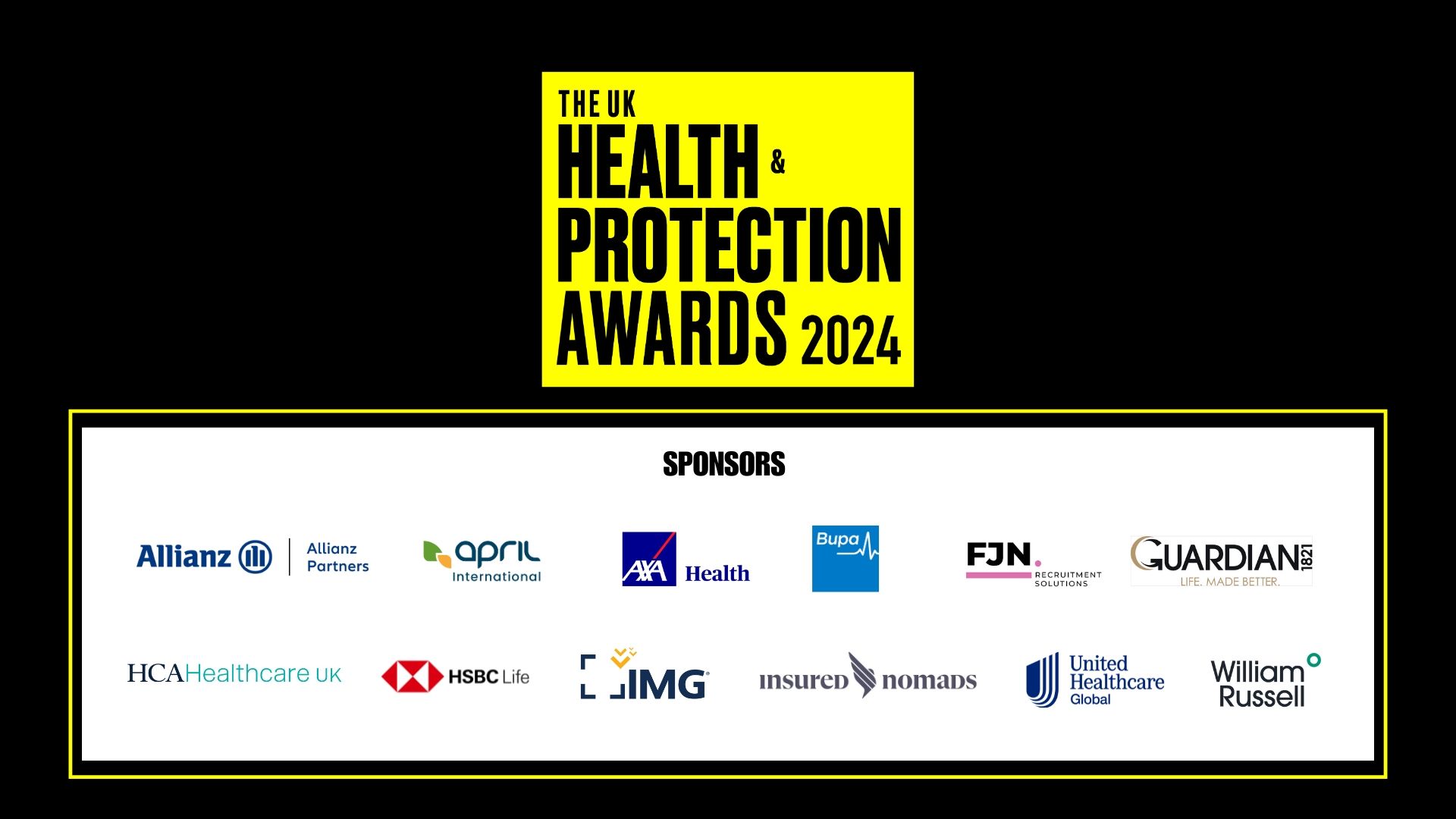
  • Engage Health Group nominated for three awards at the UK Health & Protection Awards 2024!

    Engage Health Group nominated for three awards at the UK Health & Protection Awards 2024!

    Engage Health Group will be joining over 700 advisers, insurers and industry representatives for the 2024 Health & Protection Awards on the 10th October in London.

    We are hugely proud and excited to be nominated for multiple accolades once again. This year we’re shortlisted for three prestigious awards:

    • Best International Group Advice Firm
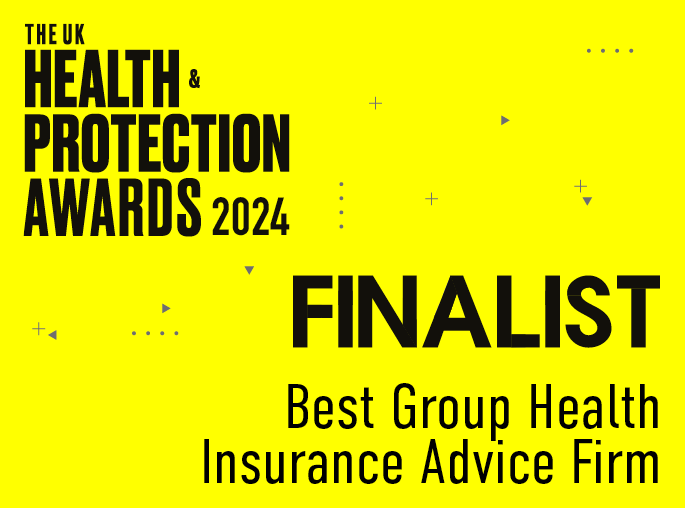
    • Best Group Health Insurance Advice Firm
    • Best Group Protection Advice Firm

    Fingers are crossed for a successful evening!

    Whatever the result, we are excited to celebrate with other industry leaders and recognise the achievements of fellow advisers and insurers following a challenging 12 months for the industry and wider economy.


    What is the significance of our nominations?

    Best International Group Advice Firm

    The international health and protection market is vast and complex. Without the right advice it can quickly overwhelm even the most astute HR professional. Receiving a nomination for this category is recognition of the hard work and expertise of our international team to make it that much easier for clients.

    This year’s successful entry was by International Senior Manager, James Carrick, demonstrating his work in assisting a client in the gambling industry employing 4000 people.

    James harmonized the client’s widely spread International Private Medical Insurance plans to create an even level of support to all employees across 19 countries, ensuring staff were better supported and confident in their understanding of the benefits on offer.

    Led by Ian Abbott and Penny Pemberton, the Engage International team has a global broker network spanning more than 70 countries, enabling us to provide top-level advice to organisations hiring abroad or remotely.

    Best Group Health Insurance Advice Firm

    Our next successful entry for this year’s awards stems from the hard work of Stuart Isaac, Employee Benefits Consultant. Stuart arranged a private medical insurance plan to support a communications company with a particular focus on employee mental health and family support services.

    This nomination is a testament to the effort and commitment we put in to providing the best health insurance advice to clients. We help SMEs, charities and corporates source the best health insurance plans for their employees, delivering high quality advice and support at every step of their journey.

    Engage also carries the administrative burden on behalf of clients and we assist with the claims and renewal process.

    Best Group Protection Advice Firm

    This award highlights the quality of advice our team delivers every day in relation to Group Income Protection, Group Life Insurance, Group Critical Illness Cover and Group Disability Coverage. Our team offers ongoing support to meet the changing needs of clients and employees, going that extra mile to ensure all the details are taken care of.

    This entry was submitted by our Director Nick Hale and featured his fantastic work assisting a law firm specialising in the tech industry. The rising costs and complexities of running their Group Life Assurance and Group Critical Illness schemes had left them on the verge of cancelling the policies. That was until the company contacted Nick at Engage, where he worked with the insurer to lower renewal premiums and ensure that staff could make full use of the scheme.

    Both schemes are now running properly, and fully fit for purpose.


    Are you looking for award-worthy advice?

    The nominations for this year’s awards wouldn’t have been possible without our hard-working teams, who ensure that every customer gets the best possible service.

    If you’re a company looking for expert advice in relation to your health and protection policies, then please do get in touch. Our advice is given free of charge and we deliver detailed market analysis, reviews and quotes; saving time and cutting the workload of HR teams in the process.

    Email enquiries@engagehealthgroup.co.uk or call 01273 974419 to arrange a no-obligation discussion.


  • Navigating health insurance in Malta: a guide for employers

    Navigating health insurance in Malta: a guide for employers

    Malta’s sunny climate and rich history make it extremely appealing for business and travel. The island is also home to a highly-skilled, multi-lingual, and cost-effective workforce – making it an attractive proposition for overseas expansion.

    The country is a particularly popular location for companies in industries such as tourism, financial services, manufacturing and gambling.

    Any employer launching in the area will need to consider whether to offer health insurance to staff and, if so, how to go about it.

    This guide breaks down how the Malta healthcare system works, including some of the private healthcare options available to companies.

    We also look at typical employer practice in the area, courtesy of the latest Axco reports (data accurate as of May 2024).

    The article will be of particular interest to companies wishing to:

    • Cover remote workers based in Malta
    • Establish new offices and workspaces in Malta
    • Provide cover for expats assigned to Malta

    Need help supporting your global workforce in Malta or other international locations? Contact our award-winning health and protection brokers on 01273 974419 or email enquiries@engagehealthgroup.co.uk.


    How does the Malta health system work?

    Malta
    Malta

    Malta was known as the ‘Nurse of the Mediterranean’ back in 1916 due to its role in providing medical care to wounded soldiers during World War I. Today, its healthcare system is generally well regarded although, like many countries, it has issues with personnel shortages and increasing demand from an ageing population.

    The public health system is overseen by the Ministry of Health, the Elderly and Community Care. It is funded through social insurance and social security contributions.

    If you’re a legal resident of Malta and make social insurance and social security contributions, you are entitled to use the country’s public healthcare system.

    Services include:

    • GP access
    • Medical tests and diagnostics
    • Preventative treatments
    • ‘Curative’ surgeries and treatments
    • Rehabilitation services
    • Doctors’ visits
    • Outpatient care
    • Emergency care

    Primary healthcare also includes:

    • Immunisations
    • Dental care
    • Antenatal and postnatal care
    • Diabetes treatment
    • Specialist paediatric care.

    Some services such as dental and optical treatment are means-tested.

    Prescription drugs are free of charge for those suffering from prescribed chronic conditions and for those on low incomes.

    Alongside Malta’s public system, there is also the option of private healthcare.

    ** The Mater Dei is the main public hospital in Malta, located in Msida. A speciality and training facility, expats can also use this public hospital but pay out of pocket depending on private health insurance policies.


    Should employers provide health insurance to their workers?

    There are two aspects to this: what is required legally and what is advisable in order to compete for talent in the region.

    Legal requirements:

    As an employer you pay social insurance and social security contributions, and so will your employees through the tax system. This means your employees will qualify for free health insurance regardless of their nationality

    Best practice:

    Nonetheless, it’s common for employers in Malta to provide private health insurance plans to their employees, according to data from Axco.

    Below we have listed reasons businesses might invest in health insurance for staff in Malta.

    • Competition for talent: Companies have to compete for skilled talent from a relatively small population size. Indeed, Malta ranked 21st in The Global Talent Competitiveness Index 2023.
    • High expat population: Around 1 in 5 of all residents in Malta are expats, so providing a fully-equipped health insurance policy ensures all staff are covered, no matter where they are from.
    • Fast access to health services: Giving employees peace of mind they have access to the highest standard of healthcare when in a new location.
    • Provide cross-border cover: If cover is set up as an international plan, employers can support staff across multiple countries.
    • Fill in any health gaps: Even though Malta’s healthcare is generally well regarded, there are inevitably stresses on the system from time to time, which a private health plan can navigate.
    • Added extras: Many Group Health Insurance plans will include mental health support tools, virtual GP and Employee Assistance Programmes. Via an international health plan, you can also get medical repatriation services if required and a wide range of other services.

    Are you seeking out a health insurance policy for your Malta-based team? Engage Health Group is here to answer all your questions and give you the most expert advice and tailored quotes. Call 01273 974419 or email enquiries@engagehealthgroup.co.uk for a free no-obligation consultation.


    What is typical employer practice?

    The following information is drawn from Axco’s Employee Benefits Report which tracks typical employer practice in Malta.

    Firstly, it is common for employers to provide supplementary medical benefits through a Group Health Insurance plan. In fact, a Group Health Insurance policy is often required under collective labour agreements.

    Group Health Insurance plans will typically include the basics for most employees, including core services such as outpatient services and minor operations. But high-paid employees are likely to expect more features and have policies tailored to their needs.

    Dental and optical coverage is usually provided under a separate plan and restricted to senior managers and directors.

    Employees may be given the option of upgrading coverage at their own expense.

    Employers usually finance 100% of the Group Health Insurance premium. This means the employee is rarely expected to contribute.


    How should you invest in a health policy for Malta?

    As with any global location for businesses, employers in Malta can invest in a single-country domestic health insurance scheme or a broader International Group Health Insurance plan.

    Option 1: Invest in a one-country health insurance scheme

    If a company only has staff working in Malta, then it makes sense to invest in a single health insurance policy covering Malta only.

    Option 2: Invest in a global health insurance plan

    International Business Health Insurance is a private medical insurance policy designed to cover a globally diverse workforce under a single policy. It gives staff access to top healthcare facilities in multiple countries, as well as therapy services for physical and mental health.

    An International Group Health plan also helps businesses avoid the complexities of navigating different local healthcare systems – a big plus for HR teams

    International schemes provide very comprehensive care and features, much more so than one-country domestic plans. Features can include medical repatriation, extra maternity support, 24/7 multi-lingual helplines, even support with chronic conditions – as always inclusions and exclusions vary depending on the policy.


    Who provides Group Health Insurance policies covering Malta?

    The main health insurance providers for Malta are Cigna, Allianz, Bupa, AXA, and Now Health.

    As always, there are domestic and local insurers to also explore based in Malta for more localised care and support.

    The international health insurance market is complex. Navigating your options alongside all the local legislation technicalities takes time, work, and patience. Turning to expert consultants, like our international brokers at Engage Health Group, can guide you through and explain all available options. The goal is to land on the perfect solution fits the unique requirements of your business and its staff.


    Enlist the help of an International Health Insurance broker

    Engage Health Group’s international team of brokers can help! Our award-winning team has a wide global broker network spanning more than 70 countries, enabling us to provide the best guidance for businesses no matter the location. We will talk you through all the complexities, perform full market reviews and deliver quotes designed around the specific needs of your business.

    Contact us at enquiries@engagehealthgroup.co.uk or call 01273 974419 for FREE no-obligation reviews, price comparisons and advice tailored for your unique business.

    Further reading: Exploring the health insurance market in Gibraltar: a guide for employers – Engage Health Group

  • Exploring the health insurance market in Gibraltar: a guide for employers

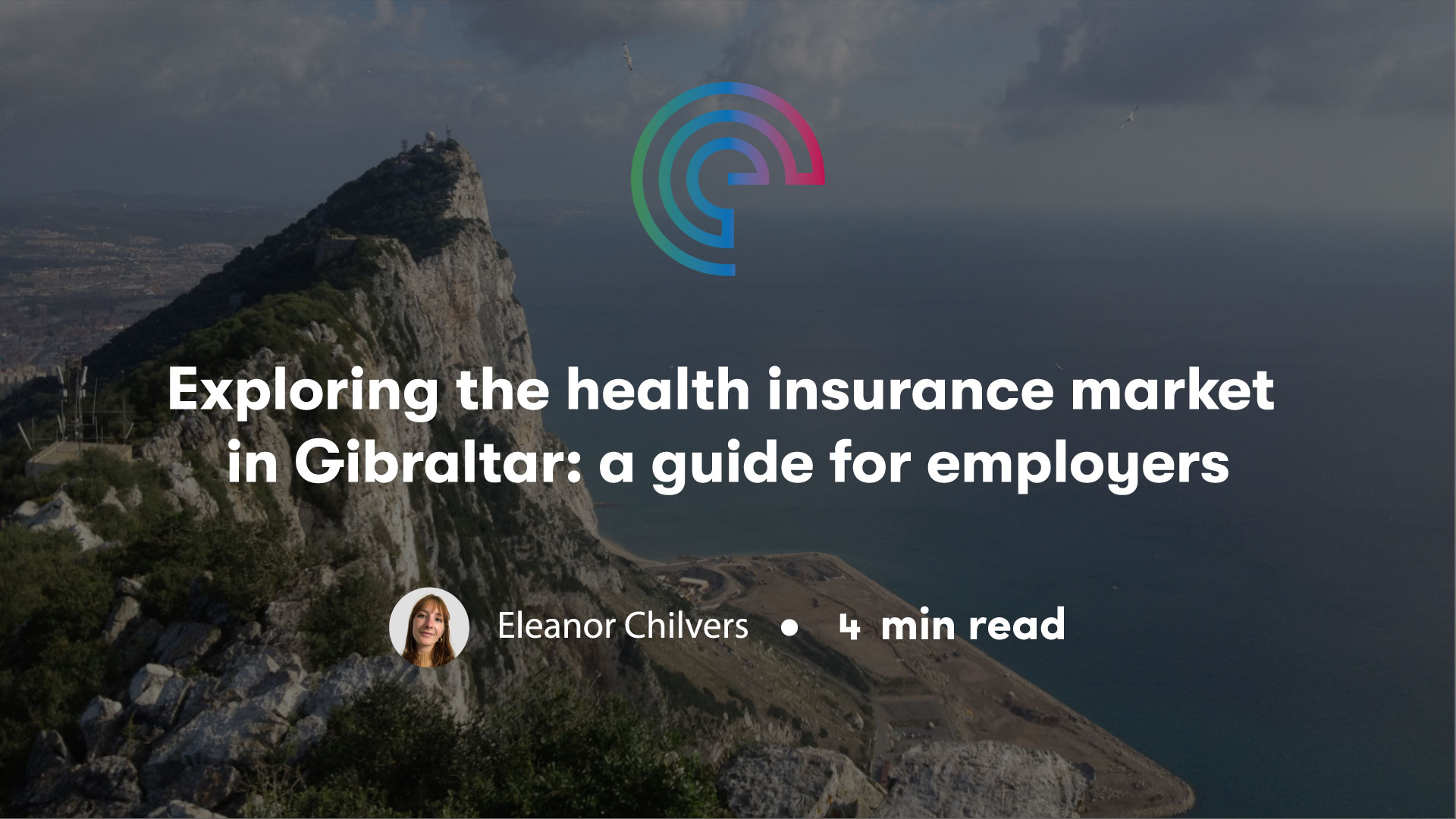
    Exploring the health insurance market in Gibraltar: a guide for employers

    A headland on Spain’s south coast, Gibraltar has been a British Overseas Territory since 1713 with an estimated population of 33,000 Gibraltarians.

    If you’re an employer expanding into ‘The Rock’ then you’ll want to know about the healthcare system and the different options available when it comes to health insurance coverage.

    This article is designed for companies exploring their options for providing health insurance in the country, including those seeking to:

    • Cover remote local workers in Gibraltar
    • Launch new offices in the country
    • Cover expats on assignment

    Need help supporting your global workforce in Gibraltar or beyond? Contact our award-winning health and protection brokers on 01273 974419 or enquiries@engagehealthgroup.co.uk.


    How does the Gibraltar health system work?

    Healthcare in Gibraltar upholds similar standards of health as most western European countries. And like most of those countries, Gibraltarians have two main healthcare options to pick from:

    • Free public healthcare courtesy of the Gibraltar Health Authority (GHA)
    • Private medical insurance policies

    The GHA works as a similar model to the NHS, delivering primary, secondary and mental health care with low-cost or free access to general practitioners, specialists, and emergency care. The majority of Gibraltar’s healthcare staff are fluent in both English and Spanish, making their services highly accessible.

    However, access to GHA’s services depends on a person’s official status, employment, and social security contributions.


    Two ways of accessing GHA healthcare:

    #1 Registering with the GHA
    • Gibraltar is a British territory so anyone with a valid UK passport is eligible for free medical care
    • Register using a fully eligible passport at the local Primary Care Centre
    #2 European Health Insurance Card (EHIC)
    • EU Citizens can access the GHA’s free healthcare too, but accessibility differs from nationality to nationality
    • An EHIC card allows for any necessary state-provided medical treatment
    • The EHIC and Global Health Insurance Card (GHIC) does not cover medical repatriation, on-going medical treatment, or non-urgent care
    • EHIC cover is not an alternative to travel insurance or private health insurance!

    Note: for some emergency treatments it is possible you might be transferred to Spain.


    Why provide employee health insurance in Gibraltar?

    Gibraltar’s public health system is generally well regarded. Eight in 10 adults rate the Primary and Secondary care they receive as being “very good”, according to a public health survey.

    Nonetheless, having access to a wider range of services with shorter waiting times is still appealing. Below we have listed a handful of reasons why businesses might want to invest in health insurance for staff in Gibraltar.

    • Win the battle for talent: Competition for talent in Gibraltar is high (particularly in the growing gambling industry), so offering a strong healthcare plan will boost your attractiveness to potential candidates.
    • Fulfil employer duty of care: Fill in any gaps in Gibraltar’s healthcare system and ensure that employee’s health needs are fully looked after.
    • Provide choice to your staff: Over which hospitals they wish to receive treatment in.
    • Offer cross-border coverage for all: If coverage is provided as part of an international plan, you can support staff in multiple countries under one plan.
    • Provide staff with immediate cover: Without the need for additional delays and paperwork.
    • Support Gibraltarian staff travelling to Spain: From 1 July 2022, Gibraltarians travelling to Spain could no longer get free emergency healthcare, therefore a Group Health Insurance policy (or travel insurance policy with health coverage included) that covers Spain would be highly appreciated by staff.

    Employers looking to provide comprehensive health cover for their Gibraltarian employees can opt for either a Gibraltar-specific domestic policy, or via an International Health Insurance plan covering staff in multiple countries in one policy.

    Let’s look at your options…


    How should you invest in a health policy for Gibraltar?

    As with any global location, businesses in Gibraltar can invest in a single-country domestic health insurance scheme or a broader International Group Health Insurance policy.


    Option 1: Invest in a local policy

    If a company only has staff working in Gibraltar, then it makes sense to invest in a single health insurance policy covering Gibraltar only. But if you wish to cover employees across more than one country then you have a choice between maintaining separate policies or investing in a single international policy…


    Option 2: Invest in a global plan

    International Business Health Insurance is a private medical insurance policy designed to cover a global workforce under a single policy. It gives staff access to top healthcare facilities in multiple countries.

    An International Group Health plan also helps businesses avoid the complexity of navigating different local healthcare systems, which is a big plus for HR teams.

    The other important feature of international schemes is that they provide superior features compared to a one-country scheme. Features like medical repatriation, extra maternity support, 24-7 multi-lingual helplines, and assistance with chronic conditions can be included (as always inclusions and exclusions will vary depending on the policy).

    What the right options for your business? Put all your questions to the international experts at Engage Health Group for FREE. Call 01273 974419 or email enquiries@engagehealthgroup.co.uk.


    Who provides Group Health Insurance policies covering Gibraltar?

    The main insurers in the region are, AXA, Bupa, Now Health International and IMG (ALC Health). While other international health insurers can provide coverage in the region, only the aforementioned insurers have agreements with the local clinics on a direct billing basis, which helps make the process a lot smoother for all involved – patient and business alike.

    Navigating the international options as well as the local legislations can take time to work through.  But expert consultants, like those at Engage Health Group, can guide you through it and explain your options free of charge.


    Enlist an International Health Insurance broker for free

    The International Health Insurance market is complex and filled with many insurers offering different plans as they rally for the attention of businesses. Health insurance is a considerable investment, so it’s important to locate a policy that perfect fulfils the needs of your employees.

    Engage Health Group’s international team can help. Our award-winning advisors can talk you through all the complexities, perform full market reviews and deliver quotes designed around the specific needs of your business.

    Turning to an experienced international broker ensures you are investing in the best cover whilst lightening the load on your busy HR team.

    Contact us at enquiries@engagehealthgroup.co.uk or call 01273 974419 for FREE no-obligation reviews, price comparisons and advice tailored to your business.