Tag: health insurance

  • Navigating healthcare & health insurance on the Isle of Man

    Navigating healthcare & health insurance on the Isle of Man

    If you have staff visiting or relocating to the Isle of Man, you’ll want to know how its healthcare system works – and whether health insurance is necessary.

    Our international consultants at Engage Health Group have expertise covering more than 70 countries worldwide, including the three ‘Crown Dependencies’ dotted around the UK: Jersey, Guernsey and Isle of Man.

    The Isle of Man may have the King and Queen’s head on its money, but like the other Crown Dependencies, it’s not part of the UK – it governs itself. Consequently, the Isle of Man has its own healthcare system separate from the NHS.

    In this guide, we walk you through what you should expect from the island’s healthcare system as a short or long-term visitor, and consider the health insurance options available to you.

    If you’re a company seeking to arrange health insurance for employees living on – or travelling to – the Isle of Man, you can contact our team for a free consultation. Our experts will happily talk you through your options and arrange quotes free of charge. Call  01273 974419 or enquiries@engagehealthgroup.co.uk.


    How the healthcare system works in the Isle of Man

    The Isle of Man has its own equivalent of the NHS called Manx Care. Like the NHS, it’s funded through taxes and offers healthcare free at the point of delivery. However, it’s only available to Isle of Man residents.

    Nonetheless, if you’re a UK resident, you may be able to access free emergency treatment under the “reciprocal healthcare agreement” made between the UK and Isle of Man all the way back in 1948.

    This agreement allows UK residents to receive necessary medical treatment while visiting or working on the island. The following is important to know:

    • Eligibility: UK residents visiting the Isle of Man for up to six months are covered for emergency medical treatment.
    • Coverage: The agreement covers treatment for conditions that are diagnosed after arriving or if an existing condition worsens while on the island.
    • Limitations: The agreement only covers emergency care. Non-emergency treatments, like dental treatment and repatriation back to the UK, are not covered.

    There are a couple of things to pick out here.

    Firstly, if you stay for more than six months you can register as a resident and get free access to the island’s public health system.

    Secondly, for the purposes of emergency care, a clinician will decide whether or not the treatment can reasonably wait until you return to the UK.

    Related reading: Exploring health insurance in Jersey: a guide for employers


    When to buy health insurance on the Isle of Man

    There are two main circumstance where you might consider buying group private health insurance for staff on the Isle of Man:

    Short-term stays:

    If you’re an employer sending UK staff on a short-term assignment to the Isle of Man then it’s certainly worth considering purchasing health insurance. While emergency care is covered on the island, it does not cover all eventualities, and the definition of what constitutes emergency care can be very strict. The Isle of Man government recommends visitors take out an “appropriate level of health insurance” during their stay.

    Another thing worth saying is that the healthcare agreement between the UK and Isle of Man does not cover medical repatriation. This means that if you receive emergency care on the island but thereafter require ongoing treatment that’s no longer considered an emergency, then you will need to relocate back to the UK – and this travel will come at your own cost.

    Longer-term stays:

    If your staff will be living on the island for more than 6 months, they can register as a resident and therefore get full access to its free healthcare system. Locate Isle of Man is a useful resource for anyone planning to relocate to the island. Here it provides a useful overview of all the health services included for residents.

    You might still consider buying private health coverage on the island even if you’re eligible for free healthcare as a resident. Access to private health facilities can give your employees faster access to treatments and consultations. You might even get access to services you wouldn’t find within the public healthcare system.

    You should also consider it from a talent acquisition perspective. Health and wellbeing benefits are a key tool in making your company attractive to would-be applicants, which is particularly important on the Isle of Man where competition for talent is fierce.

    Do you need help exploring health insurance options for staff working in the Isle of Man? Engage Health Group will talk you through your options and provide pricing tailored to your needs. Call 01273 974419 or enquiries@engagehealthgroup.co.uk to find out what’s possible.


    What Company Health Insurance can I get on the Isle of Man?

    You can purchase Group Private Medical Insurance as part of a wider global health policy or as a one country policy. Insurers operating in the Isle of Man include AXA, Bupa and Aviva – but most will only cover the Isle of Man as part of an international health plan.

    It’s best to first liaise with one of our consultants who can discuss your options and give impartial advice. Our team can find the policy that best meets your needs and budgetary constraints. We’ll also consider your wider employee benefits policies, and gather tailored quotes without any obligation to buy.


    What does Engage Health Group offer for the Isle of Man?

    Choosing the right Isle of Man health insurance policy for your team can be challenging. Every provider will promise they have the best solution, so it’s vital to get impartial advice from experts like those at Engage Health Group.

    Here are some of the things we will do for you:

    • Assess your needs: We’ll take the time to understand your business, your employees’ needs, and how everything links with your wider employee benefits strategy.
    • Customise solutions: We’ll deliver health insurance policies designed to meet your business’s unique needs, covering emergency care, non-emergency treatment, and repatriation where applicable.
    • Provide impartial advice: Our advice is unbiased, helping you understand the different insurers and policies available, so you can choose the best option for your business.
    • Give clear communication: We make sure you and your employees fully understand how the health insurance policies work, from coverage terms, to medical services covered and how the claims process works.
    • Provide ongoing support: Should you proceed with buying a Group Health Insurance plan for the Isle of Man, we’ll take care of the admin and continue to support you throughout the life of your policy.


    Ready to cover your employees in the Isle of Man?

    The healthcare system on the Isle of Man has its own unique character due to the way it runs its own free public healthcare system for long-term residents, but then has the reciprocal agreement with the UK to offer emergency care to short-term visitors.

    As a business hub, the island is highly competitive too. This makes your employee benefits offering an important tool for ensuring your business is an attractive proposition to current and prospective employees. But it’s also about fulfilling duty of care to all the employees who work for your business – and making sure their health needs are protected wherever they are working.

    To kickstart your search for the right Isle of Man Health Insurance policy, contact our award-winning team via 01273 974419 or enquiries@engagehealthgroup.co.uk.

  • Benchmarking: How do you shape up against the competition?

    Benchmarking: How do you shape up against the competition?

    Recruiting and retaining the best talent in your industry requires a competitive salary, a winning company culture and, increasingly, an attractive employee benefits offering.

    So, how do you know if your employee benefits are ticking all the right boxes? This is where benchmarking comes in.

    This article explores the value of comparing your benefits to typical employer practice in the industry or country you’re operating in.

    Need help launching or reviewing your employee benefits plan? Get FREE expert advice from our consultants on 01273 974419 or email enquiries@engagehealthgroup.co.uk.


    The importance of benchmarking

    What is employee benefits benchmarking?

    The most common form of benefits benchmarking involves the process of comparing how your benefits package compares to standard industry practice.

    For businesses that employ globally, there is the challenge of benchmarking across different countries and ensuring you are complying with local regulations.

    James Carrick, International Senior Manager at Engage, explains the process:

    “Benchmarking could be anything from providing a side-by-side benefit comparison, to industry-specific information, country prevalence and typical employer practice.”

    When Engage customers receive benchmarking reports, they also benefit from the consultant’s expertise.

    “We often extrapolate the gathered information for our clients too, providing our insights and opinion rather than just passing on the report’s findings without context.”

    “For a company with employees in different countries, we can use our network of local specialists to ensure we’re up-to-date with typical employer practice and the finer points of local legislation.”

    Whether you need to start from scratch with an employee benefits plan, or are reviewing current benefits, benchmarking helps businesses to:

    • Identify any missing key benefits compared to competitors
    • Ensure are no duplicated benefits – and therefore unnecessary spend
    • Assess how you shape up within your industry
    • Provide the employee benefits staff expect
    • Ensure your employee benefits are relevant and effective


    The benefits of employee benefit benchmarking

    In the rush to execute their benefits policies, some businesses skip benchmarking but this would be unwise. Below we have outlined the benefits of benchmarking, especially when it comes to attracting and retaining the best talent.

    #1 Identify gaps in your benefits plan compared to the competition

    For example, if other businesses in your industry are providing a Group Health Insurance plan and you’re not, potential employees will likely take this into account when considering their options. Equipped with this knowledge, you can ensure your benefits plan is, at the very least, matching the competition.

    #2 Attract and retain the best talent in your industry

    Multiple surveys show that employee benefits have become a key part of a company’s recruitment and retention efforts.

    According to a survey by One Medical, 69% of employees say they might choose one job over another if it’s offering better benefits.

    Meanwhile, 37% of employees joined their current employer due to their benefits package, and 44% said they have stuck with their employer for the same reason, according to the 2024 Global Benefits Attitudes Survey.

    By benchmarking against best practice in your industry, you can be sure that your benefits package will be a key tool for finding and keeping the best people.

    #3 Adapt to trends

    Benchmarking enables your business to stay ahead of the game – not just matching the competition, but going one step further.

    Employee demand is always evolving and so are the products and technologies that companies have available. Doing some benchmarking will potentially highlight some new ideas and trends that you previously hadn’t been aware of.

    Exploring what other companies are providing for employees is a good starting point to ensure your benefits are capable of standing out from the competition.

    #4 Ensure compliance in different countries

    If you have multiple plans in different countries around the world, it can be very difficult to monitor whether you have the correct plans in place. Consequently, there is a risk that there may be gaps if local benefits don’t meet local regulatory requirements

    #5 Greater visibility and cost control

    It’s not easy to have visibility of all your benefits in the UK and around the world.  A full benchmark of your benefits highlights opportunities to simplify and harmonise benefit plans and identify cost savings


    Want to discover how your employee health, wellbeing & protection policies compare against the competition? Engage Health Group consultants provide benchmarking services as part of our free consultancy service to UK businesses, including those with global workers. Contact our team for free advice and guidance on 01273 974419 or email enquiries@engagehealthgroup.co.uk.


    The value of investigating other companies

    Salary size remains important, but employee benefits policies are a very important part of your ‘Employee Value Proposition’ especially during a time of high living costs and high demand for health and wellbeing support.

    Employee benefits packages can either make or break hiring and retention efforts. Sixty-five per cent of candidates say they consider employee benefits as a crucial factor when job hunting, according to data collected by Avado.

    By benchmarking your employee benefits offering against other companies in your industry, you can ensure your offering is capable of attracting the kinds of people who will drive your business forward.


    How our Engage brokers implement benchmarking

    Some businesses will come to us with a list of objectives they want to achieve from their employee benefits investment. For example, they may want to reduce staff sickness or improve staff retention rates.

    With this in mind, we have to think of all possible angles when we assess data. Benchmarking allows us to take a look at what other companies in your industry are providing.

    Our benchmarking service is also provided for companies with a global footprint. On a global scale, it can be  overwhelming to have multiple plans in different countries. The auditing and benchmarking of benefits ensures global oversight and governance.

    We can compare and contrast benefits trends, requirements and expectations across different countries.

    We provide country reports and country prevalence information to some clients for free,” says James. “It’s important to note though that this is on a case-by-case basis, determined by the size, strategic fit and revenue opportunities.”

    As employee benefits brokers, Engage Health Group will:

    • Review your existing benefits in all countries
    • Benchmark benefits against mandatory and typical market practice
    • Compare benefits against competitors
    • Analyse results and identify gaps and potential areas for improvement or change
    • Provide an overview of potential costs and how best to proceed to the next steps

    Contact our expert team at enquiries@engagehealthgroup.co.uk or call 01273 974419 for FREE no-obligation advice and support.

  • Engage Health Group nominated for three awards at the UK Health & Protection Awards 2024!

    Engage Health Group nominated for three awards at the UK Health & Protection Awards 2024!

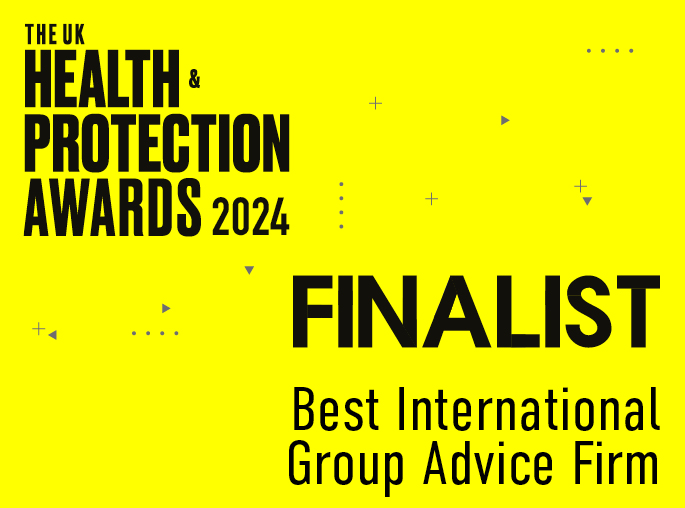
    Engage Health Group will be joining over 700 advisers, insurers and industry representatives for the 2024 Health & Protection Awards on the 10th October in London.

    We are hugely proud and excited to be nominated for multiple accolades once again. This year we’re shortlisted for three prestigious awards:

    • Best International Group Advice Firm
    • Best Group Health Insurance Advice Firm
    • Best Group Protection Advice Firm

    Fingers are crossed for a successful evening!

    Whatever the result, we are excited to celebrate with other industry leaders and recognise the achievements of fellow advisers and insurers following a challenging 12 months for the industry and wider economy.


    What is the significance of our nominations?

    Best International Group Advice Firm

    The international health and protection market is vast and complex. Without the right advice it can quickly overwhelm even the most astute HR professional. Receiving a nomination for this category is recognition of the hard work and expertise of our international team to make it that much easier for clients.

    This year’s successful entry was by International Senior Manager, James Carrick, demonstrating his work in assisting a client in the gambling industry employing 4000 people.

    James harmonized the client’s widely spread International Private Medical Insurance plans to create an even level of support to all employees across 19 countries, ensuring staff were better supported and confident in their understanding of the benefits on offer.

    Led by Ian Abbott and Penny Pemberton, the Engage International team has a global broker network spanning more than 70 countries, enabling us to provide top-level advice to organisations hiring abroad or remotely.

    Best Group Health Insurance Advice Firm

    Our next successful entry for this year’s awards stems from the hard work of Stuart Isaac, Employee Benefits Consultant. Stuart arranged a private medical insurance plan to support a communications company with a particular focus on employee mental health and family support services.

    This nomination is a testament to the effort and commitment we put in to providing the best health insurance advice to clients. We help SMEs, charities and corporates source the best health insurance plans for their employees, delivering high quality advice and support at every step of their journey.

    Engage also carries the administrative burden on behalf of clients and we assist with the claims and renewal process.

    Best Group Protection Advice Firm

    This award highlights the quality of advice our team delivers every day in relation to Group Income Protection, Group Life Insurance, Group Critical Illness Cover and Group Disability Coverage. Our team offers ongoing support to meet the changing needs of clients and employees, going that extra mile to ensure all the details are taken care of.

    This entry was submitted by our Director Nick Hale and featured his fantastic work assisting a law firm specialising in the tech industry. The rising costs and complexities of running their Group Life Assurance and Group Critical Illness schemes had left them on the verge of cancelling the policies. That was until the company contacted Nick at Engage, where he worked with the insurer to lower renewal premiums and ensure that staff could make full use of the scheme.

    Both schemes are now running properly, and fully fit for purpose.


    Are you looking for award-worthy advice?

    The nominations for this year’s awards wouldn’t have been possible without our hard-working teams, who ensure that every customer gets the best possible service.

    If you’re a company looking for expert advice in relation to your health and protection policies, then please do get in touch. Our advice is given free of charge and we deliver detailed market analysis, reviews and quotes; saving time and cutting the workload of HR teams in the process.

    Email enquiries@engagehealthgroup.co.uk or call 01273 974419 to arrange a no-obligation discussion.


  • The Legal Profession has a major mental health crisis with wellbeing a low priority

    The Legal Profession has a major mental health crisis with wellbeing a low priority

    Is mental health an issue for solicitors and lawyers?

    When thinking about the legal sector the first things that come to mind are stereotypical: over-achieving, competitive work environment, insane work hours and workload, drive and attention to detail. But sadly, these traits associated with lawyers and solicitors can also be flipped into weaknesses.
    Statistics and surveys have revealed over the last ten years just how impactful the work environment in law firms really is with a shocking one in ten under 30s experiencing suicidal thoughts from the strained work attitude in this sector (IBA 2020 survey). The legal industry is surrounded by poorly represented cultural attitudes, enforced by hit shows like Suits, promoting a “work is life” mentality, and leaving no room for emotional health.
    In an increasingly competitive space, mental health and wellbeing should be a top priority. So why is it still not being unanimously addressed? And what can be done to help?
     

    Key terms that need to be understood:

    To fully understand what is happening in the legal sector, there are key terms that need to be defined. These include:

    • Burnout: emotional exhaustion / cynicism resulting from over-working and doing “people-work” – showing the employee’s inability to manage emotions when dealing with clients


    • Secondary Trauma: psychology signs/symptoms resulting from involvement with traumatised individuals


    • Legal Wellbeing: aims to improve work-life balance, manage stress, positive mindset, promote habits of consistent self-care – no one-size-fits-all approach to achieving this, personal (specialised to legal sector)

    Wellbeing is what law firms should be focussing on to provide the support that lawyers and solicitors need to stay working in this environment.
     

    Mental health statistics (for lawyers and solicitors):

    Over the last ten years, there has been an increasing number of surveys looking into how many employees are affected by the work they do. Unfortunately, each survey comes to similar conclusions. The mental well-being of lawyers is being massively underlooked.
    The 2014 Law Society in England and Wales survey reported 96% of solicitors (out of 1,517) were experiencing negative stress, 19% at severe levels.
    Taken place more recently (July 2020 – December 2020), the International Bar Association released findings from their survey addressing the legal industry on an international level. The findings showed:

    • 41% said they could not discuss wellbeing issues with their employer, in-case it would damage their career or livelihoods
    • 22% said there was no wellbeing help, support, or guidance in their jurisdiction
    • Between the ages 25-35, 75% believe their employers are not doing enough for mental wellbeing
    • 28% said they need an increased level of awareness in the workplace
    • 23% asking for more resources for professional support and intervention
    • One in six lawyers with disabilities have experienced suicidal thoughts from work-related mental wellbeing issues – with one in eight having self-harmed

    The numbers shockingly reveal how deep-rooted and serious the mental health issues are in this industry, spreading across all ages and genders. So, do these issues simply just come with practising law? Or is it a structural issue that has been ignored?
     

    Why is there such poor mental wellbeing in legal professions?

    “Law firms have this uncanny ability to keep you forever unsatisfied, striving for something just out of reach” (Richard Martin – former City employment lawyer and author of This Too Will Pass)
    The legal sector’s “just get on with it” attitude means that mental health issues are shrouded in stigma. Struggling means weakness and can ultimately affect career progression. This is just one reason why lawyers are uncomfortable with speaking out about mental health.
    Common trends in the causes for poor lawyer wellbeing are long hours, high billing requirements, large caseloads, alienating culture, competition, deadlines, expectations of success and emotionally demanding work.
    The 2020 IBA survey provides statistics on the main reasons for this mental health crisis:

    • Most common reasons: high workload, work-life balance, stress / pressure
    • How frequently employees experience negative factors: 46% competing demands, 44% long hours, 48% unrealistic time pressures

    Secondary legal trauma is also a huge factor. Working with traumatised individuals, hearing multiple traumatic narratives, and working with distressing evidence is enough to impact anyone’s wellbeing. It is the assumption that lawyers can approach these cases rationally that results in a lack of extra support and understanding.
    Alongside these factors are the unhealthy coping mechanisms that are so widely adopted in the legal community. Law training disconnects lawyers from themselves – work trumps emotional life. To avoid feelings of suffering, substance and alcohol abuse is widely undertaken where extra support and open discussion should be.
     

    What can be done to help solicitors and lawyers?

    Although the most recent surveys outline how much of an issue mental wellbeing currently still is for lawyers, there are steps that can and are being taken to begin to change this.
    The charity LawCare stated that the number of contacts looking for support for anxiety doubled from 2020 to 2021. This shows the shifting legal context where employees are actively seeking help for poor mental health
    Law firms can support staff through schemes such as the Mental Health First Aider (MHFA). The training course provides First Aiders with the knowledge and skills to support any colleague struggling with mental health. It provides an opportunity to understand different mental illnesses from depression, addiction, suicide, to eating and personality disorders.
    Listed below are organisations that are now providing support for those in the legal community:

    • Solicitor’s Regulation Authority: helpline
    • LawCare: charity offering emotional support, information, and training to the UK legal community – raising awareness to improve the legal culture
    • Law Society Helpline
    • Mind
    • Samaritans

    Now with organisations set up to give support and spread awareness on the mental health issues that once seemed too deep-rooted to shift, the legal community are finally opening up.
    However, the change must also take place in the individual. Practising mindfulness, setting up boundaries between work and home, and prioritising the wellbeing of yourself all make huge differences towards changing the very structure of the legal community.
     
    As the focus on mental and corporate wellbeing in the legal industry, and other companies, is slowly becoming a priority, so is the emphasis on employee benefits. Find more information on how mental health comes under employee benefits here.
    Furthermore, some Private Medical Insurance providers are now covering drug and alcohol abuse within their mental health coverage.  This is something that has typically been a general exclusion.
    Contact us through Engage Health Group where we give free no-obligation advice and support on how a well-structured Employee Benefits strategy can work hard to care for your workforce.

  • New home cardiac assessment service launched by Bupa

    New home cardiac assessment service launched by Bupa

    There has been growing concern amongst cardiologists of late that thousands of people may be putting themselves at greater risk of long-term heart damage, having put off obtaining medical help during the pandemic.

    As a result, Bupa UK has launched a new home-assessment cardiac service, which is designed to provide fast diagnosis of heart conditions.

    The service has been piloted successfully in London and offers customers a video consultation with a cardiologist within 36 hours.  This follows a member contacting the Bupa claims team in the usual way and being triaged via their specialist team.

    If it is deemed that further investigation is needed to provide a firm diagnosis, the latest electrocardiogram (ECG) and pathology test kits are sent directly to the customer’s home and a further video consultation is then arranged to discuss the results.

    It’s hugely important that anyone suffering with cardiac symptoms, such as palpitations or discomfort, doesn’t delay seeking the appropriate medical advice.  During the pandemic there has been a significant reduction in the number of people seeking medical advice, and a general reluctance or inability to access medical support.  And whilst hips, knees and related conditions can safely wait, some things shouldn’t be put on hold.

    This is yet another fantastic innovation from a leading insurer, acting to make the patient journey more convenient and efficient.

    There has been a real drive from Employee Benefits providers in the last few months to adapt and ensure that their customers can still access services from the comfort of their own home, and this initiative is a great addition.

    This new cardiac service is part of Bupa’s enhanced range of remote health services, where customers can get advice from nurses on everyday health concerns, treatment from GP’s, physios, mental health therapists, and fast access to diagnosis and treatment for critical conditions such as cancer, and mental health.

  • Engage Health Group Appoints Former Head of UK Intermediary Distribution at Bupa Global

    Engage Health Group, the Brighton based health insurance and employee benefits consultancy, has appointed Ian Abbott who joins the business as a Director.

    Abbott will lead the organisation’s global health insurance broking arm, Engage International, with focus around managing Engage Health Group’s existing international client base and driving growth through strategic partnership and acquisition.

    Prior to his new role, Abbott has spent 11 years in the healthcare market, seven of which with leading IPMI insurer, Bupa Global in a senior sales roles across the Corporate, SME and Individual business channels. Most recently Abbott’s role of Head of UK Intermediary Distribution, assumed responsibility for a range of duties including strategic broker management, proposition development and establishing Bupa Global’s preferred provider (PPA) proposition.

    Nick Hale, Engage Health Group’s founding Director, commented: “Strengthening our global presence has been a key ambition for the group as the world becomes a smaller place and international businesses take the opportunity to harmonise their global benefit provision where possible.  Ian brings a wealth of experience and is highly respected within the industry.”

  • Employee Assistance Programmes – A powerful employee benefit

    Employee Assistance Programmes – A powerful employee benefit

    Why choose Employee Assistance Programmes?

    With the cost being relatively low and with such an array of benefits for both the employee and employer, it’s easy to understand why more businesses are incorporating an Employee Assistance Programme (EAP) as part of their overall benefit strategy.

    An EAP (Employee Assistance Programmes) is often positioned as a highly valued employee benefit that promotes wellbeing and a strong work/life balance, but is also proven to:

    • Greatly reduce absenteeism (34% reduction on average – source CBI absence survey)
    • Improve productivity in the workplace
    • Reduce stress in staff members and colleagues
    • Improve staff retention
    • Demonstrate a caring approach towards employees
    • Add value to an organisation (a return of £14 for every £1 invested – source CBI absence survey)

    There is no “one size fits all” approach when it comes to employee health and wellbeing, but an EAP can certainly tick a lot of the boxes and help employers to gain a better understanding of the risk factors which exist within their business. Furthermore, by providing a tangible tool to help employees navigate any personal issues they may be facing, employers can drive higher levels of engagement, and can have a meaningful and genuine impact when an employee needs it most.


    Some of the key benefits of an EAP are as follows:

    • Confidential support services 24 hours a day, 7 days a week, 365 days a year
    • Face-to-face counselling with fully qualified professionals
    • Stress related support
    • Cognitive Behavioural Therapy (CBT)
    • Support for substance abuse, domestic abuse, debt problems, bereavement
    • Family support services
    • Serious illness and accident support
    • Critical incident Support (in the event of a critical incident in the workplace)
    • Medical helplines (for general medical advice)

    These benefits can be invaluable to staff who mightn’t have an alternative channel available to them, and who also mightn’t be comfortable raising any personal concerns directly with their employer.


    Mental health awareness and early intervention

    Additionally, with the upward trend in mental health awareness, more and more employers are working hard to intervene where appropriate to do so, and assist employees in managing mental health conditions. Mental health is one of the greatest causes of sickness absence in the UK, and whilst the overall rate of sickness absence has fallen by 15%-20% since 2009, absence due to mental health reasons in this period has actually risen by around 5%.

    Stress Related Absence has a significant impact on productivity and the below chart, recorded over a 10-year period by a major Income Protection provider, demonstrates the important role that early intervention plays.

    The table shows that when an episode of stress related absence receives intervention at week four, the average total length of absence is 24.3 weeks.  Where intervention is received between 21-25 weeks, the average total length of absence is over 55 weeks.

    Many EAP providers will aim to assist employers to intervene within the first seven days, prompting early discussion and support, and facilitating a faster return to work for the employee.

    Mental Health Index during the pandemic by Morneau Shepell
    Covid impact on expats mental health


    Is just providing an EAP enough?

    It’s certainly the important first step, but if employers wish to get the most return on their investment and genuinely improve the lives of their workforce, promoting the service in the right way is key.

    All EAP providers will make supporting literature available, such as posters and leaflets, which can be displayed in common areas to spread the word, but employers can go further still. Many employers now incorporate the EAP service as part of their management training, and ensure that staff are continually reminded of its features during performance conversations/121’s. Direct managers are often the first to notice a change in employee behaviour and are usually best placed to guide people to the service.

    Finally, whilst the use of an EAP by employees is confidential, many EAP providers offer meaningful Management Information to the employer, which can assist in understanding which risks are most prominent within their business. This is extremely useful as it empowers the employer to deploy resource more appropriately, ensuring that any health and wellbeing budget is being spent in the correct areas.

    Investing in the right health insurance policy for you, your family or your employees is a great way to ensure that you’re prepared should anything negatively affect your health, which could be out of your control.

    At Engage Health Group, we work with the UK’s leading health insurance providers to find the best policy for you, at the right price. Get in touch for a no obligation quote.

  • Improve Your Health at Work

    Improve Your Health at Work

    According to a recent report Britons spend 12 years of their lives working (plus eight years shopping, 30 hours crying and 368 days in the pub). It’s no wonder time spent at work can take its toll on our mental and physical well-being – from eye strain to back problems to piling on those extra calories each time a birthday comes around. Here are some tips to help you stay healthy and well whilst at work.


    Conscious Snacking 

    Whether it’s the communal table that houses the office treats or that week in July when everyone seems to have been born, the treats on offer in the workplace can soon add a couple of hundred calories to your daily intake. Snacking regularly on healthier options can help you to stay full in between meals, keep your metabolism up and dissuade you from reaching for the Maltesers every time you pass by on your way to the loo.


    Staying hydrated

    Eight to 10 glasses of water a day can help you to keep hydrated and many foods are a good source of water too; watermelon, oranges, grapes and apples can all keep you healthy and your hydration up. Bring a water bottle into work and try to fill it up at least once before lunch, then fill it again and finish it before 3pm and then again before you leave for the day. Set your computer or phone alarm to remind you. Drinking more water may also help you to feel more awake and alert.


    Keep Moving

    Not only will this help burn the calories, getting out for a walk at lunchtime can also help you to de-stress and mentally take a break from the workplace. Take the stairs rather than the lift, park further away from the office (or cycle/walk/run in!) and remember to get up and move around regularly throughout the day.


    Workspace Assessment

    Ask your employer for a review of your desk or work area to ensure that everything (including you) is positioned as it should be. This is also very important if you’re in a job that requires heavy lifting or demands any physical activity. The damage you do now could last well into your retirement so make sure you start as you mean to go on.


    Take a Holiday

    They say a change is as good as a rest, but a rest it also pretty good so make sure you take the annual leave allowance you’re entitled to and switch off completely. With wifi on planes now and Smartphones constantly in our hands it’s becoming increasingly difficult to take a mental break from work and studies show that not doing so makes us less productive overall. Don’t feel guilty for taking a break (and don’t worry too much as we also spend 13 years listening to music, which sounds rather lovely).


    At Your Service

    Investing in the right health insurance policy for you, your family or your employees is a great way to ensure that you’re prepared should anything negatively affect your health, which could be out of your control.  At Engage Healthcare, we work with the UK’s leading health insurance providers to find the best policy for you, at the right price. Get in touch for a no obligation quote.

  • Engage Health Group partners with Taylor Brunswick Group

    Engage Health Group partners with Taylor Brunswick Group

    Engage Health Group announce international partnership with Hong Kong based Wealth Management firm.

    Extending their reach further, the Sussex based Health Insurance and Employee Benefits specialist has agreed a new partnership with The Taylor Brunswick Group, an independent and forward-thinking Wealth Management expert based in the heart of Asia.

    Taylor Brunswick is a collection of experienced and driven industry professionals who are bringing the standard and quality of onshore financial advice, offshore. Their client-centric approach based on a set of fundamental servicing principles and coupled with award winning technology has drastically improved the quality of service and advice received by clients.

    Nick Hale, Engage Health Group Director / Founder, commented,

    “We don’t enter into new partnerships lightly as being a relatively young business, our reputation and the values of those we associate with rank highly on our priority list. We have been extremely impressed with the way in which Taylor Brunswick operate and importantly, their values of a client-centric approach, integrity and independence very closely align to our own. We are very excited about working together moving forward and are certain that the relationship will be a long and prosperous one”.


    Engage Health Group will assist Taylor Brunswick’s international medical insurance clients who are re-locating to the UK and Europe, whilst Taylor Brunswick will assist those clients of Engage Health Group based in Hong Kong, Japan and Australia whom are in need of expert Wealth Management Advice.

    More information relating to The Taylor Brunswick Group can be found at https://www.majorcompare.com and https://www.majorcompare.com.hk

    If you’re interested in finding out more about Engage Health Group please contact 01273 974419 or email enquiries@engagehealthgroup.co.uk